
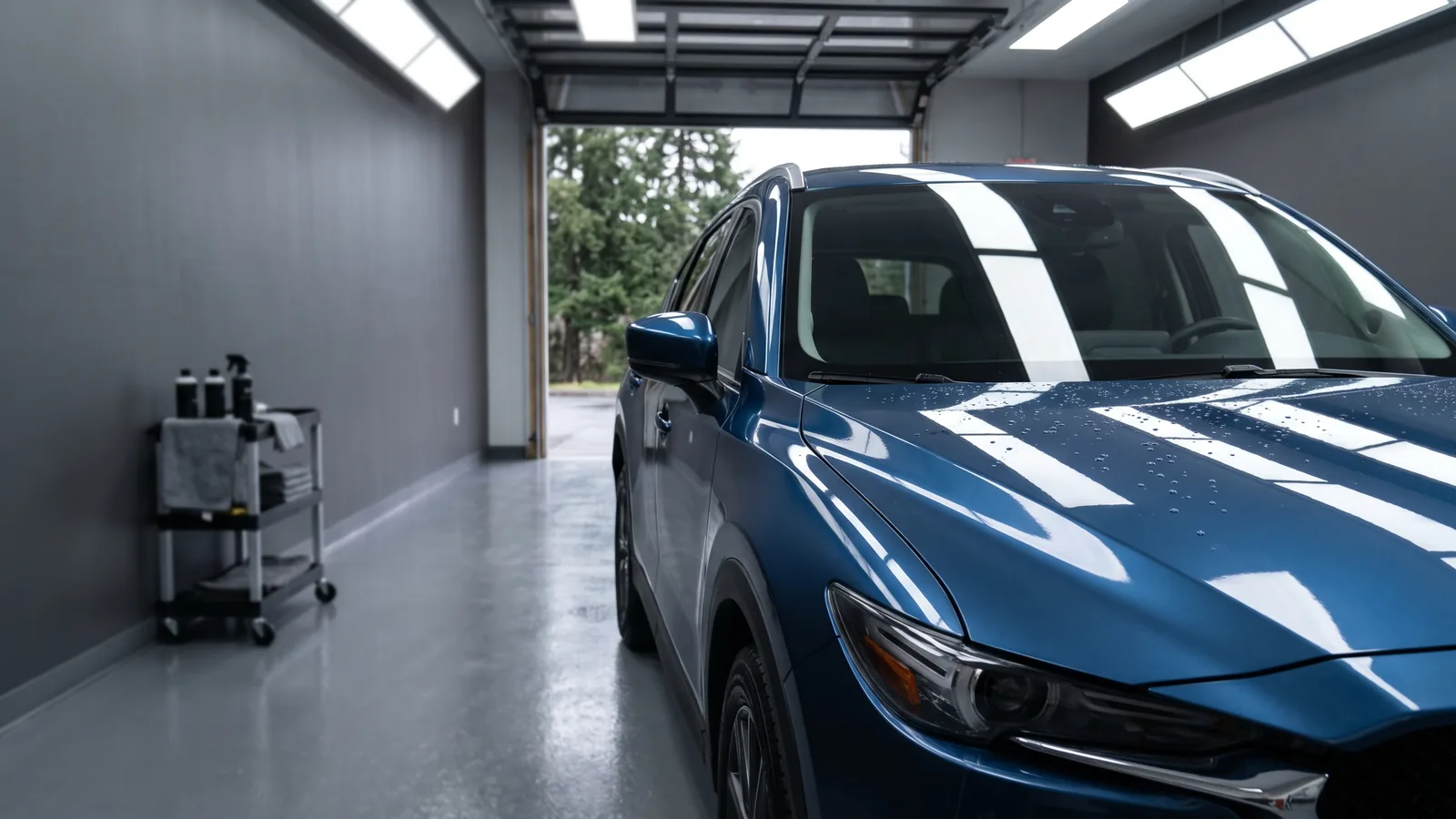
Scratches and Chips, by How Deep They Go
Most modern cars have three layers of paint: primer on the metal or plastic, base color on top of that, and clear coat over everything. Which layer the damage reaches decides whether it polishes out, needs touch-up paint or needs the panel painted.
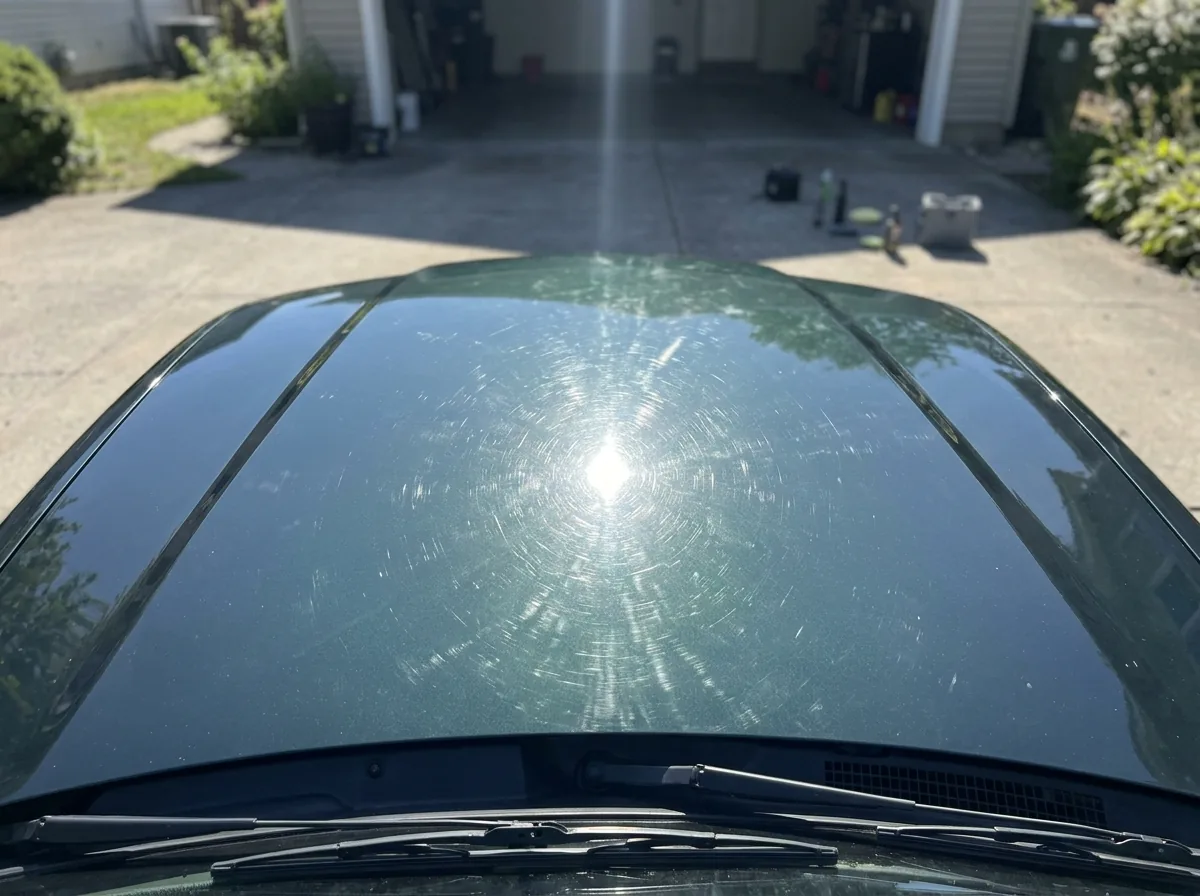
Swirls and Wash Marring in the Clear Coat
Fine circles and hairline marks across a whole panel are wash damage, sitting entirely in the clear coat. They're the most common kind and the easiest to remove, but they're a whole-car job rather than a spot repair. That's paint correction, priced and scheduled by level.
A Scratch Your Fingernail Doesn't Catch
A single line your nail slides over is usually in the clear coat. Two more checks from one polish maker: a shallow scratch reflects light about like the paint around it, and it often fades when you splash water on it. Polishing that one area levels the clear coat around the scratch until it disappears. Each pass removes a little clear, so the aim is to stop once the line is gone.
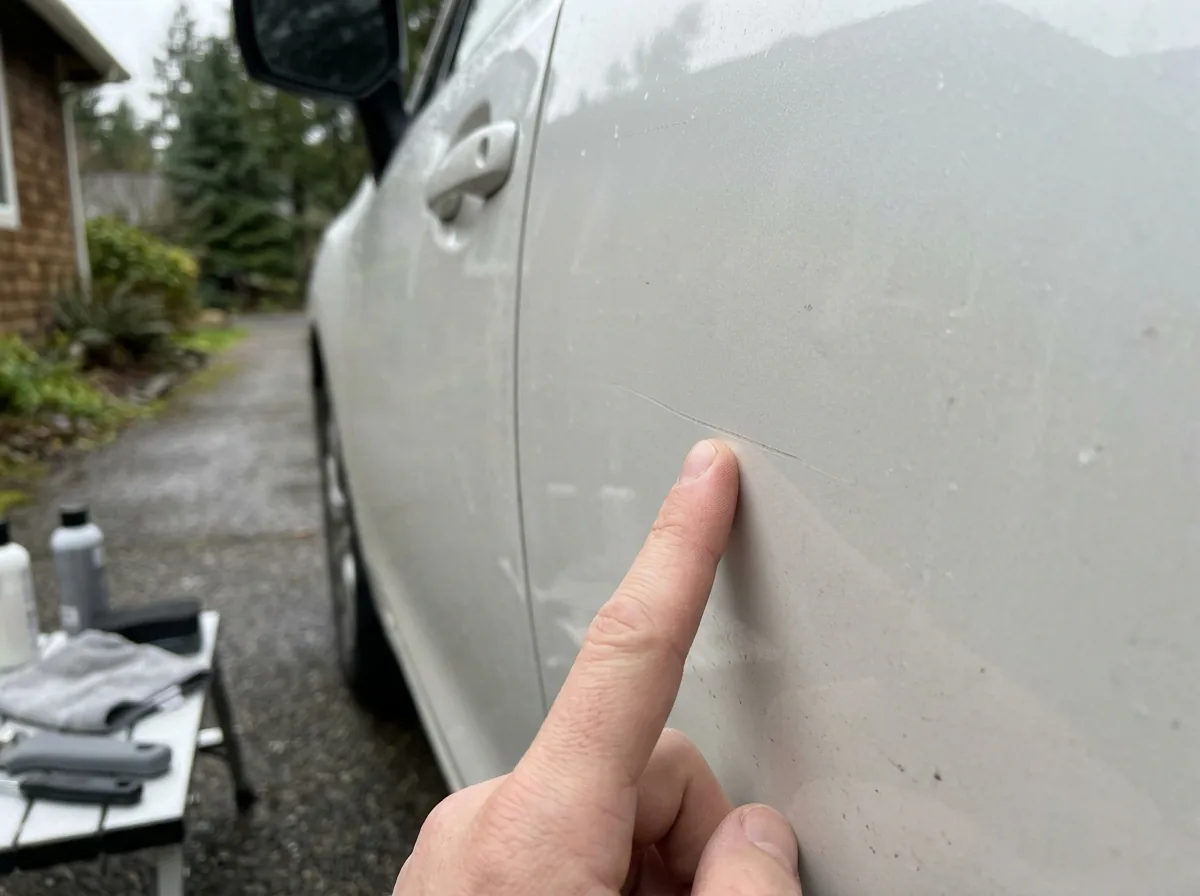
A Fingernail-Catching Scratch Into the Color Coat
If your nail catches, the scratch has probably gone through the clear into the color. Polishing can soften the edges and make it less visible, but one maker says it rarely removes it fully. The lasting fix is touch-up: color paint into the scratch, then clear coat over it, since new color without clear looks dull and wears early.
Key Scratches and Gouges Down to Primer or Metal
A dark or primer-colored line in the scratch means it has reached the primer. Bare metal or plastic showing means it has gone through every layer. At that depth polishing is out. If the primer is intact, touch-up color can go straight on after cleaning. Bare metal or plastic needs primer first, partly to protect against corrosion. A long key scratch across a door may mean repainting the panel, which the older Edmunds report put at up to $700 a panel at a body shop and about $300 from a mobile spray technician.
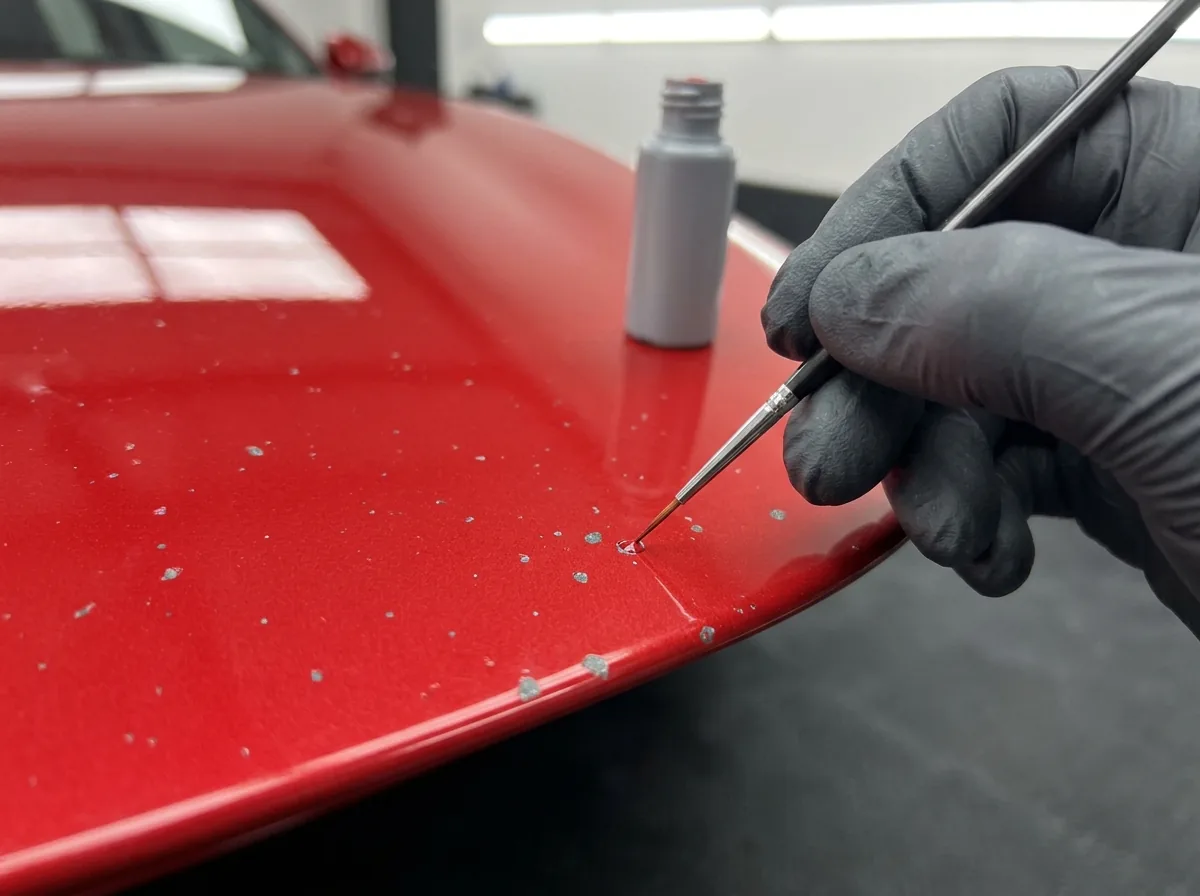
Rock Chips on the Hood and Bumper: Touch-Up Paint
Chips are small, deep and many. The mobile technician Edmunds followed filled them by putting a small puddle of chip-repair paint on the panel, squeegeeing it across so it settles into the pits, then wiping off the excess with a solvent; the owner said small pinholes "pretty much disappear." Kits for doing it yourself ran about $65 in that report. The refinishing supplier's advice for any touch-up: thin layers, each dry before the next.
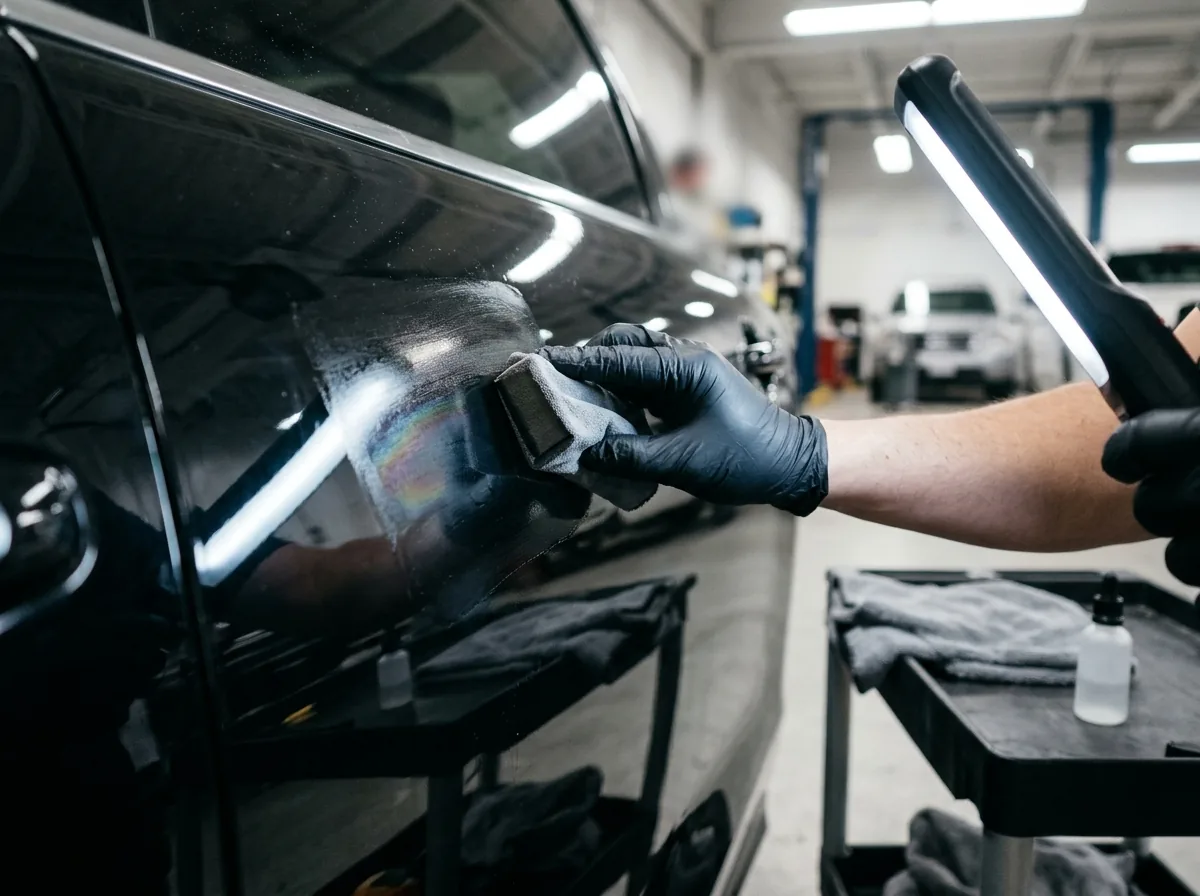
Why Kent car, truck, boat and RV owners call Ceramic Coating Kent
- Sending a request costs you nothing, and you decide whether to book
- It reaches one independent local shop, never a list of bidders
- Ask for a paint-depth reading and an inspection before correction is priced
- Ask which coating goes on and whether the maker has the warranty registered
- Plan for a week or two without washing while the coating cures
The Fingernail Test, and What Each Depth Costs
| What you see and feel | Layer reached | Usual fix | Cost reference |
|---|---|---|---|
| Fine swirls, nail glides over | Clear coat | Polish (paint correction) | $150-$300 one-step in a maker's guide |
| Single line, nail glides, fades when wet | Clear coat | Spot polish | Part of a correction quote |
| Nail catches, color still showing | Color coat | Touch-up color plus clear | $150-$225 mobile chip and scratch work (older Edmunds) |
| Dark line or primer showing | Primer | Touch-up color, or panel repaint | Up to $700 a panel at a body shop (older Edmunds) |
| Bare metal or plastic | All layers | Primer, color, clear; often a panel | Same, and do it before winter |
The Edmunds figures come from an older article, and the rest from a polish maker; none of them was gathered in Kent. A Kent shop will price your scratch after seeing it, and the cost of a full paint job, $1,000 to $6,000 or more in Kelley Blue Book's range, is the outside limit.
Two things change the price within a row: how many panels the damage crosses, since a scratch running over a door and a fender is two repairs, and how easy the color is to match. Using the paint code rather than eyeballing the color is what the Edmunds writer learned the hard way.
Doing it yourself is realistic for the top two rows. Below that, the mistakes get expensive. The supplier Edmunds interviewed sees customers forget the clear coat, skip a test of the color match, and tape off a tiny square that then won't blend into the factory paint. The chip technician in the same story isn't a fan of paint pens either; he's often called in to fix the blobs they leave. The writer's own code-matched spray can, prep kit and handle cost $79 plus shipping.
Stopping the Next Chip
Touch-up fixes the chip you have. The next one comes from the same gravel, and a coating won't stop it: coatings are far too thin to absorb a stone, which is why film exists. Clear film on the bumper and the front of the hood takes the hit instead of the paint; the paint protection film page covers thickness and self-healing tops, and full front PPF lists which panels a full front covers.
Order matters if you plan both. Fix and cure the chips first: film is transparent, so a chip under it stays visible. And if a panel that already has film gets repainted, it needs new film: one film maker's warranty excludes areas that weren't re-filmed after paint or body repair.
In winter, deep chips are worth fixing sooner. Kent treats icy roads with salt-based anti-icer and rock salt, and salt on bare metal is how a chip turns into rust. The wheel and caliper coating page covers what Kent's winter roads leave on a car and how to wash it off.