
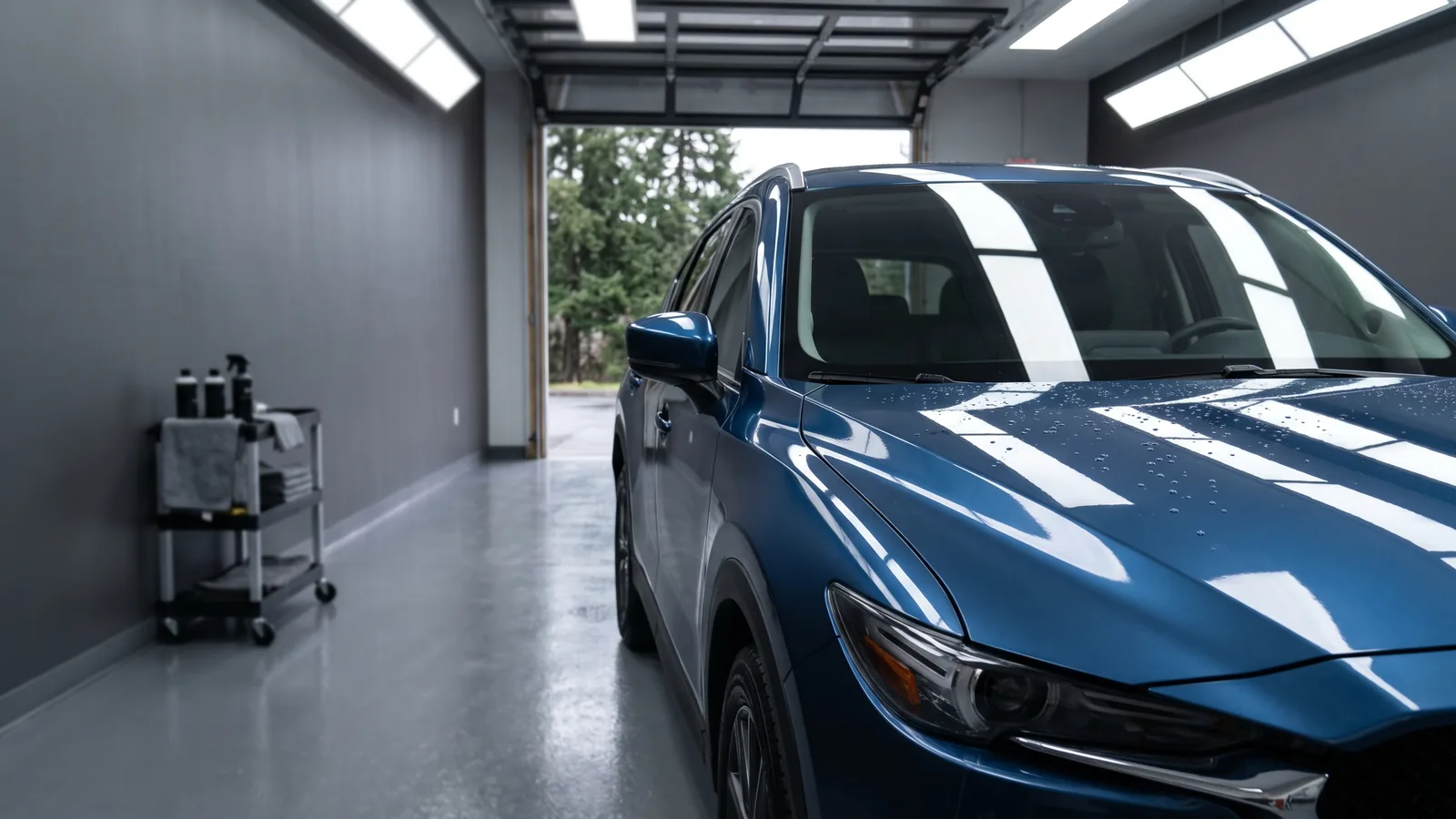
Full Front PPF: What It Covers and the Options Around It
A full front is a package of the panels that face the road. The panels film makers and car media keep naming are the hood, bumper, fenders and mirror caps, the ones that meet stones first. For what the film itself is and how thick it runs, see paint protection film.
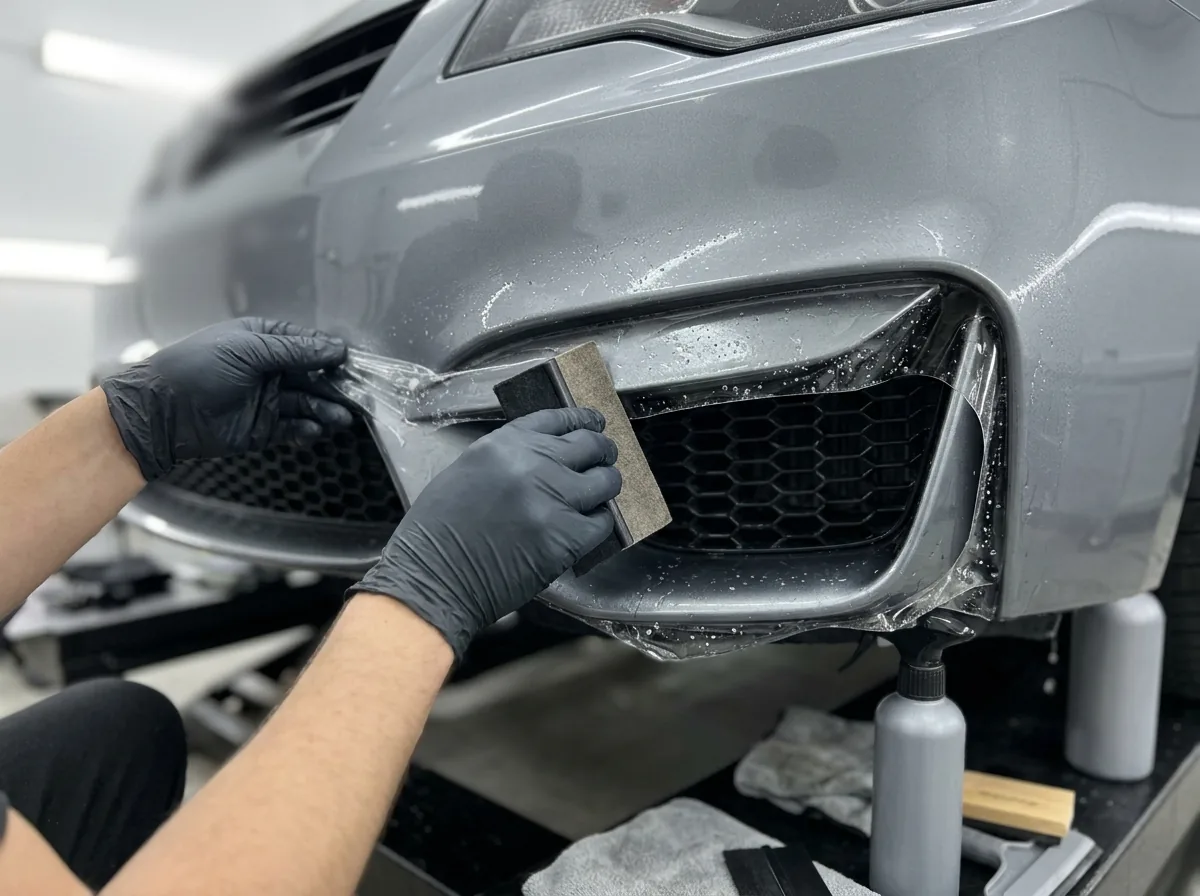
Full Bumper Including the Lower Grille Area
The bumper leads the car into whatever the truck ahead kicks up, and every high-impact list we read includes it. A full-bumper piece can run down into the lower intake and around the corners toward the wheel arches. Ask whether the bumper is one piece or several, and whether the film stops short of the openings or wraps into them.
- Panel: the whole front bumper cover, top to bottom
- Common extras on the same piece: fog light surrounds and lower trim, if painted
Full Hood vs a Partial Strip Up to 24 Inches
A partial front, the classic "clear bra," covers the bumper, mirrors, headlights and up to 24 inches of the hood, by one film maker's description. The rest of the hood stays bare. That same maker says the edge of a partial kit "may be slightly noticeable depending on the color and finish." On dark paint, a line across the middle of the hood is easier to spot. A full hood ends at the windshield, so there's no line to see.
- Partial hood: up to 24 inches from the front edge
- Full hood: front edge to windshield, edges wrapped underneath where the panel allows
Fenders and Mirror Caps
Fenders follow the hood choice: a partial kit covers their leading edge, a full front covers the whole panel back to the door. Mirror caps are small and face forward. Both a coating maker's high-impact list and Kelley Blue Book's include the mirrors.
Headlights and the Front Edge of the Roof
Headlight lenses face the road at bumper height, and one film maker's standard partial front already includes them. Film can also go on the forward strip of the roof above the windshield: one film maker's track package added that strip to the hood, bumper, fenders, mirrors and headlights. If your lenses are already cloudy, they get restored before film goes on; see headlight restoration.
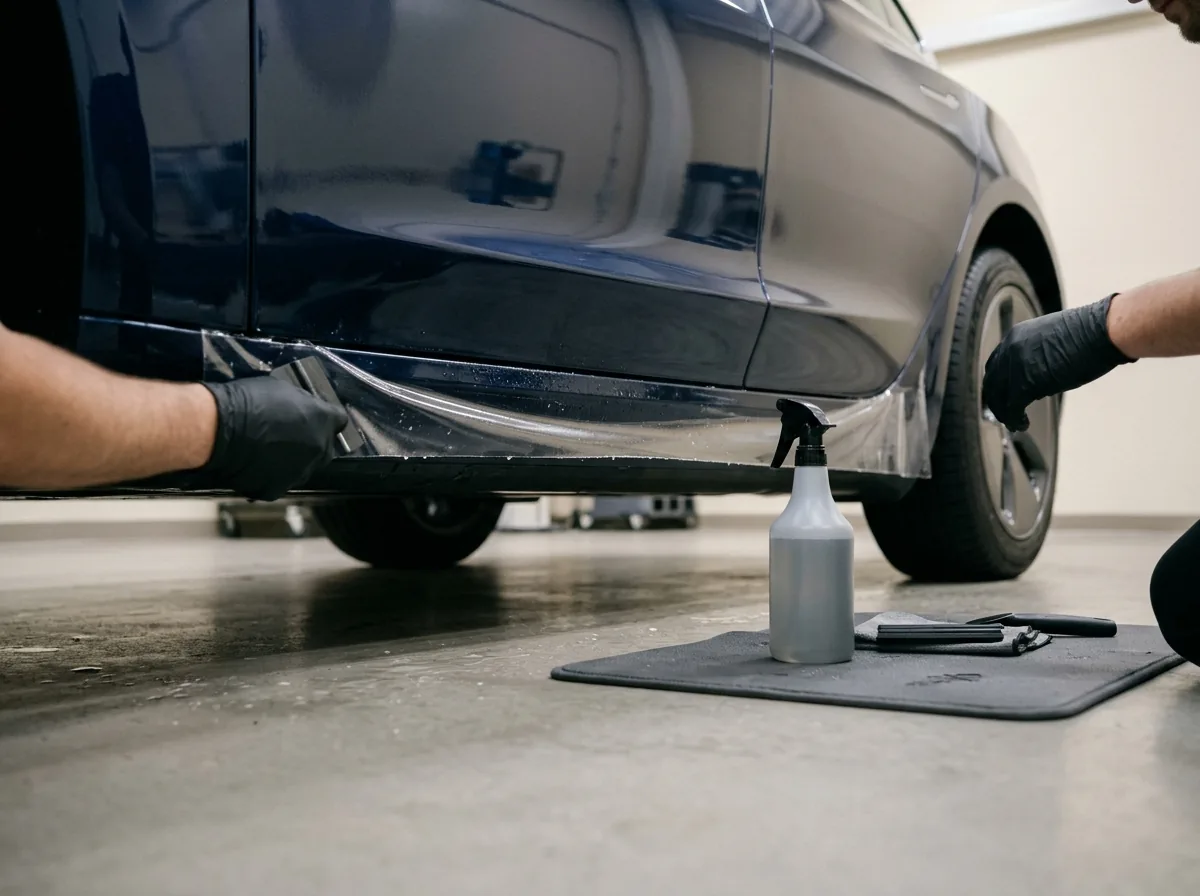
Track Pack Add-Ons for Rockers and Rear Arches
A track package goes past the front. In one film maker's example it adds the rockers and the forward-facing part of the rear fenders, and uses 10-mil film instead of the standard 8. Edmunds recommends 10-mil film for off-road use or work-site parking too.
- Adds: rocker panels, the front of each rear arch, the leading roof edge
- Film: 10 mil on the heavy-use panels
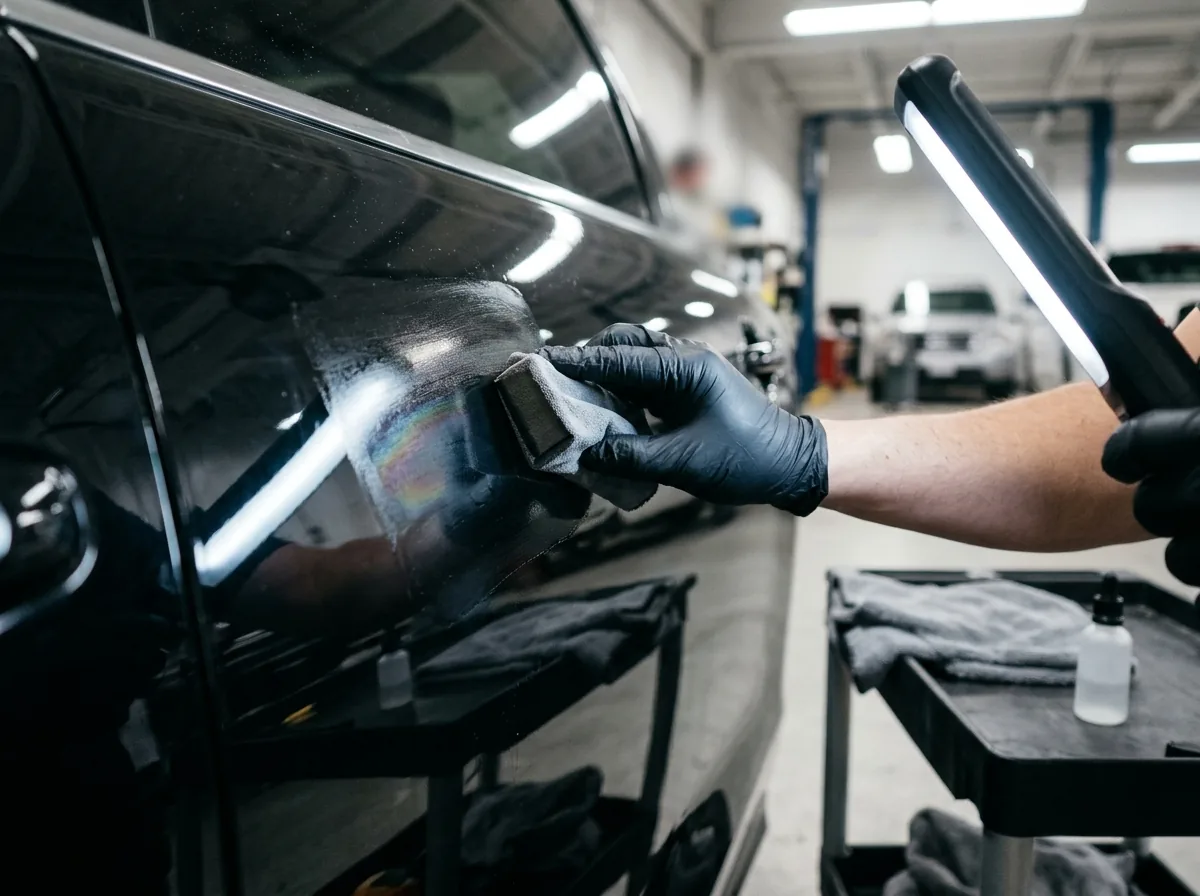
Why Kent car, truck, boat and RV owners call Ceramic Coating Kent
- Sending a request costs you nothing, and you decide whether to book
- It reaches one independent local shop, never a list of bidders
- Ask for a paint-depth reading and an inspection before correction is priced
- Ask which coating goes on and whether the maker has the warranty registered
- Plan for a week or two without washing while the coating cures
Full Front PPF Cost and When It's Enough
Front coverage costs a fraction of a full wrap. Kelley Blue Book puts a partial or front-end film job plus a ceramic coating under $2,500, against about $4,000 to $7,000 for full body PPF. The KBB editor who paid $1,800 for partial film and a full coating on a subcompact SUV reported no chips after 22,000 miles and 30 months. All of that is one car-media outlet's national reporting. Expect the Kent figure to change with the panel list you settle on and what the installer finds on the paint.
When is the front enough? Edmunds suggests that on a car under $30,000, full film is hard to justify, because the install can be a large share of what the car is worth. Protecting the high-impact areas is the middle ground. Full coverage makes more sense on a luxury car, a sports car or a collectible, where value rides on condition. For a daily commuter that racks up freeway miles, we'd start with a full front and decide on the rest later. Film is applied in sections, so more panels can be added on a later visit.
What raises a front-end quote:
Full hood instead of partial
more film and more edge work10-mil film
thicker film is slower to install on curves, and installers who bill by the hour charge for itCorrection first
film is clear, so swirls under it stay visible; see paint correctionA coating on top
Full Front PPF Edges: Wrapped, Tucked or Visible
How the edges are finished decides how the film looks up close and how long it stays down. Edmunds says installers remove door panels, taillights and trim on full jobs so the film can tuck between seams, which helps prevent delamination. On a full front that means the bumper, grille pieces or headlights may come off. One maker says pulling emblems and trim gives a cleaner look but isn't required.
Questions worth asking at the quote:
- Will the hood and fender edges wrap around underneath, or stop short of the edge?
- Which parts come off the car for the install, and which stay on?
- Is the film cut from a vehicle-specific pattern or trimmed by hand on the car?
- Where will a seam or relief cut show, and on which panels?
If the shop has photos of a finished car with the same body shape, ask to see the edges up close.