
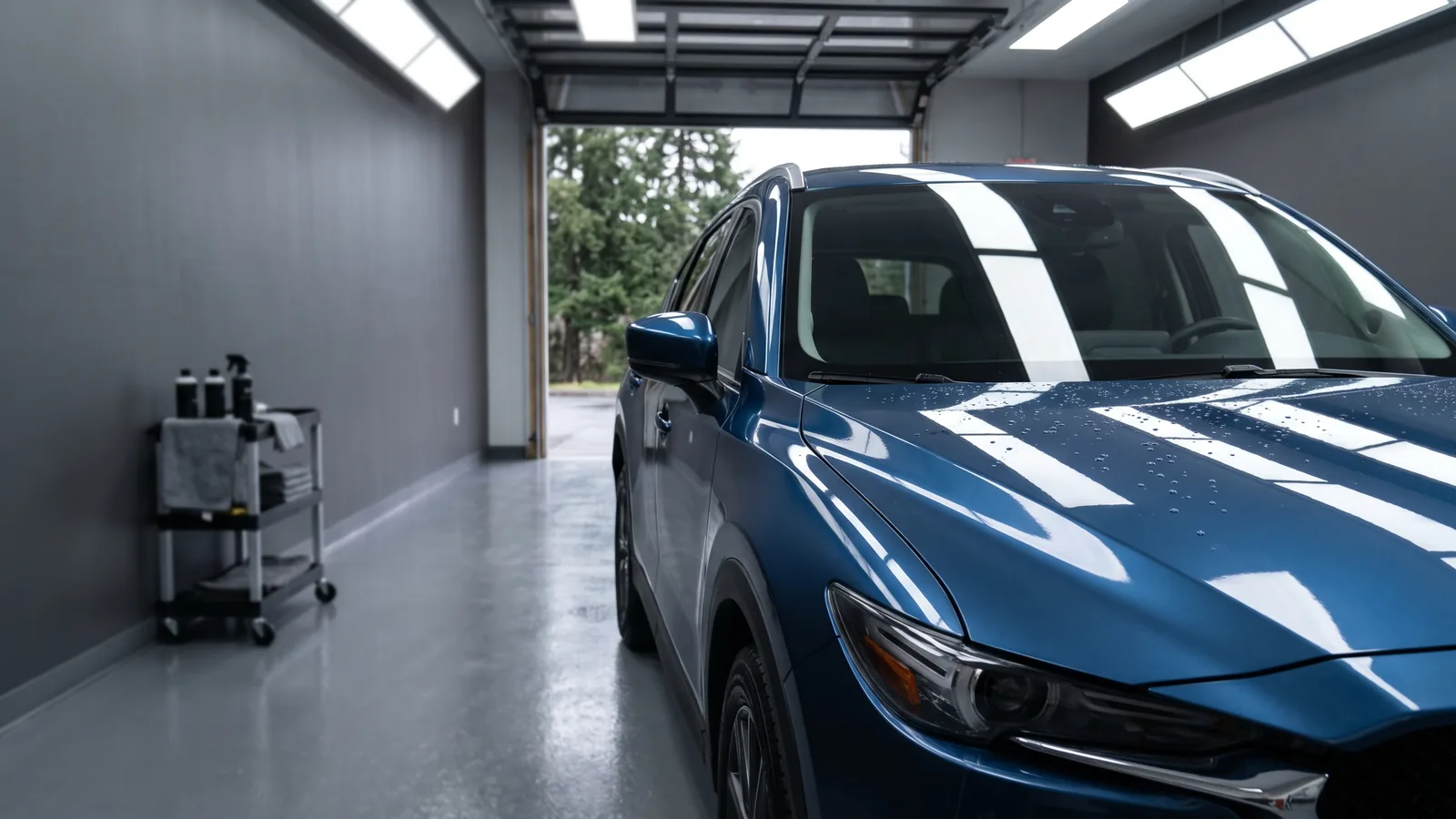
Interior Ceramic Coating, Seat by Seat and Panel by Panel
Interior coatings are made per material: one for leather, one for fabric, others for plastics. An "interior package" can mean any mix of them, so ask which surfaces are on the list.
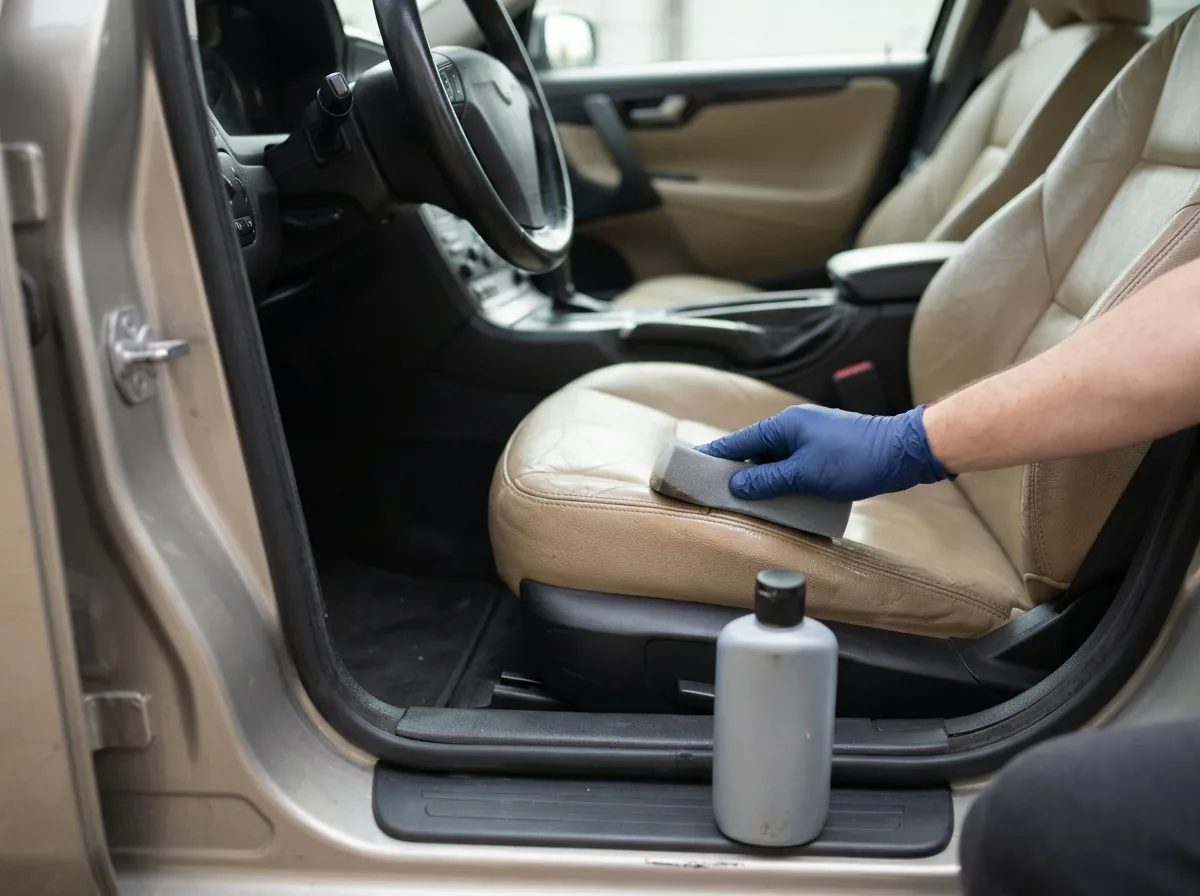
Leather Seats and Steering Wheels
Most modern car leather has a finished surface and doesn't soak up conditioner the way old-style leather did, one maker explains, so a leather coating forms a protective layer on top instead. Makers sell it for seats, door panels, the center console and the steering wheel, against dye transfer, wear and sun fading. The leather gets cleaned first, and one maker asks for a test panel before the whole seat.
- Layers: one, with a second on high-wear spots an hour later in one maker's directions
- Finish: sold as leaving the original look; one maker describes a satin finish
- Rated life: 12 to 18 months across two makers' claims
Fabric Seats and Carpets
A fabric coating bonds to individual fibers and is sold as not clogging the weave, so cloth still breathes and feels the same. Water and spills bead on top instead of soaking in. One maker lists fabric seats, carpets, Alcantara-type suede and convertible tops, rates the coating for up to a year of wear, and asks for up to 24 hours of air drying; on Alcantara-type fabric it also wants the windows down for a few hours after.
Floor Mats and Cargo Liners
Carpeted mats take the same fabric coating as the floor. Rubber and plastic liners are a different material; one coating maker sells a plastic-and-rubber product rated for interior and exterior use. The mats get more abuse than anything else in the car, so they're where a coating wears through first.
Dash, Door Panels and Plastics
Interior plastic and vinyl fade and crack in the sun. Some interior coatings are sold for hard and soft surfaces alike: one maker lists plastic (against fading, cracking and discoloration), vinyl and carbon fiber alongside leather. Ask whether the dash is coated with the same product as the seats or a separate one.
Screens and Piano Black Panels
Screens are where interior coating needs the most caution. One coating maker's guidance says an infotainment display isn't ordinary glass, may carry anti-glare or other treatments, and shouldn't get an exterior or paint coating by default; follow the screen maker's cleaning rules, and if compatibility is uncertain, leave the screen out. Gloss black panels are soft plastic under a thin varnish and scratch with a dry wipe. A coating makes them slicker and easier to dust; it doesn't make them scratch-proof. Exterior piano black trim has the same problem.
Why Kent car, truck, boat and RV owners call Ceramic Coating Kent
- Sending a request costs you nothing, and you decide whether to book
- It reaches one independent local shop, never a list of bidders
- Ask for a paint-depth reading and an inspection before correction is priced
- Ask which coating goes on and whether the maker has the warranty registered
- Plan for a week or two without washing while the coating cures
What an Interior Coating Stops, and What It Doesn't
What you're buying is time: a spill that sits on top of the fabric can be blotted up before it soaks in and stains.
What makers say it does:
Spills and water
bead on coated fabric instead of soaking inDye transfer
from clothing, the classic blue-jeans-on-tan-leather problem, is resisted on coated leatherSun fading
on leather and plastics is slowedBacteria
one leather product claims to kill 99.9% of bacteria
What it doesn't do:
- It doesn't fix a stain or crack that's already there; the surface gets cleaned before it's coated, and what can't be cleaned stays under the coating
- It wears with use; the makers' month ratings assume ordinary wear, and the driver's seat and mats get more than ordinary
- It isn't on the screens unless the screen maker allows it
One maker's guidance adds a good habit: get a written list of the surfaces that were actually coated, so you know which cleaner goes where afterward.
Interior Coating Cost and Dry Time
We didn't find a car-media or cost-guide figure for interior coating, only product prices. Leather coating lists from about $22 for a small bottle at one maker, and a fabric coating takes 100 to 250 ml for a whole car. Product prices from makers say little about what a Kent shop charges, because the deep clean before the coating is most of the work; expect the shop to quote after it sees the seats.
Fabric is the slow part. Leather coatings can be ready about an hour after application, but fabric can need up to 24 hours to air dry. Ask whether the interior cleaning is in the price or a separate line, and when the car can be used again.