
Correction Levels, From a Gloss Polish to Multi-Step Work
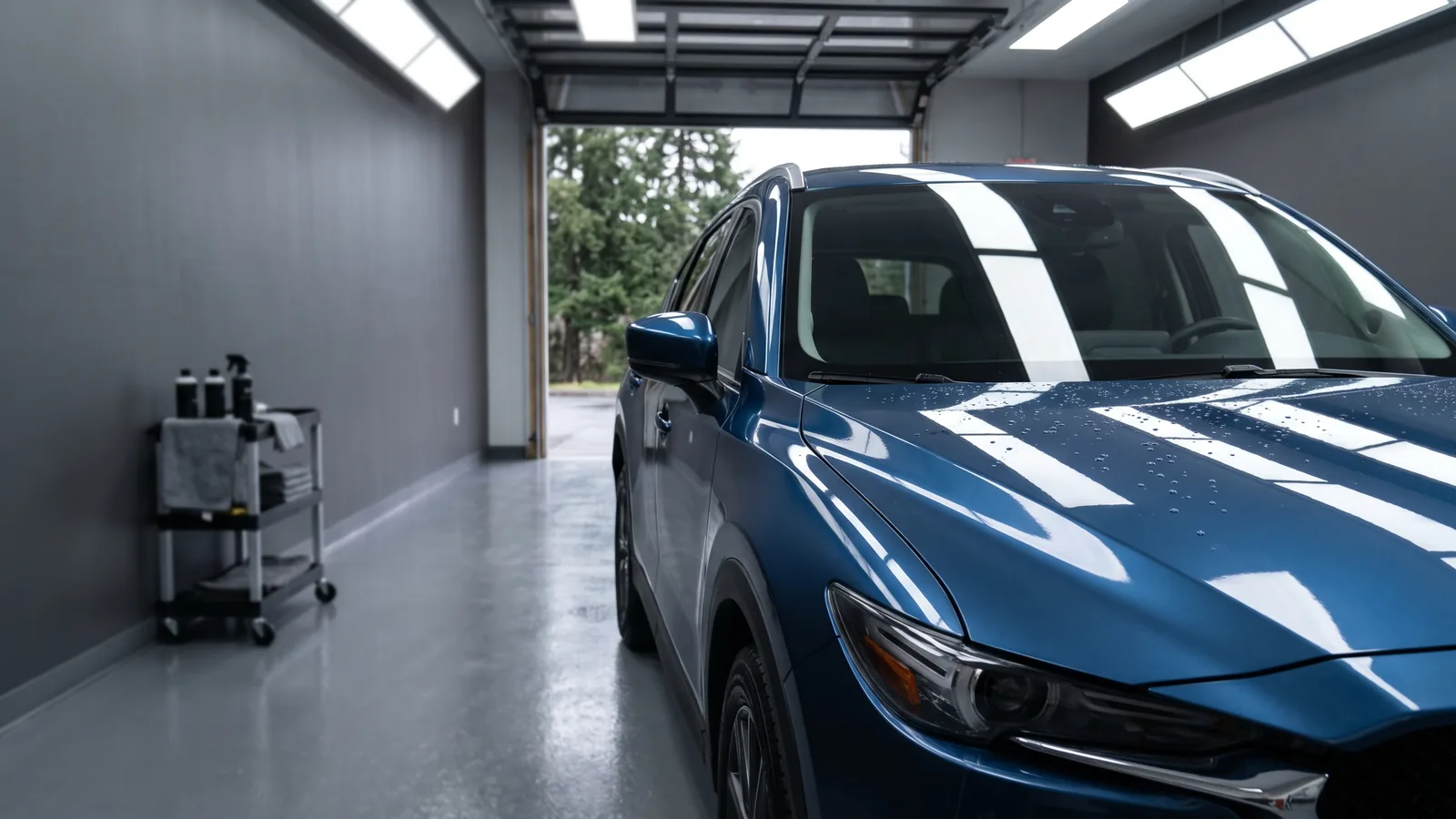
Correction is priced and scheduled by level. Each level is another pass with a more or less aggressive compound and pad, so the right one depends on how deep the worst defects go.
One-Step Polish (an Enhancement, Not a Full Correction)
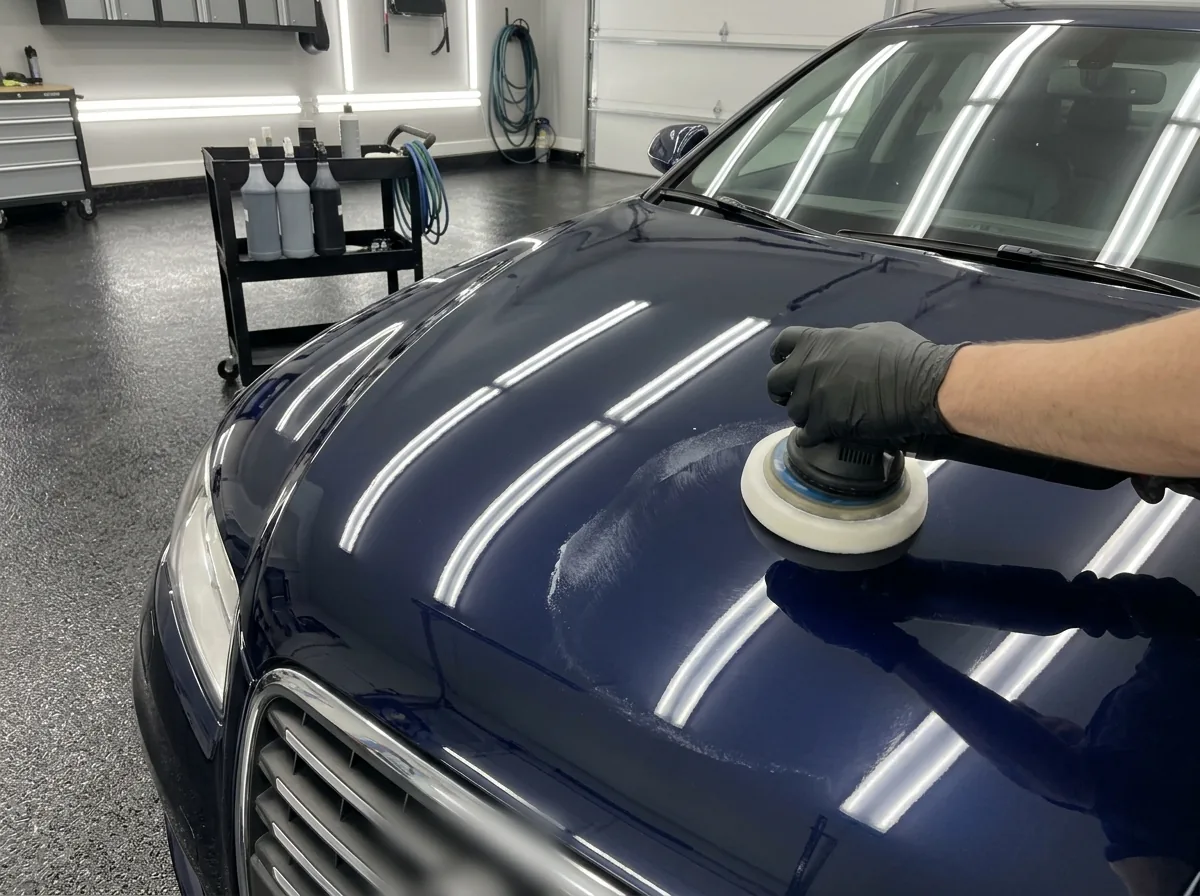
One product and one pad, usually an all-in-one polish on a dual-action machine. One maker pitches it at light to moderate swirls, scratches and oxidation; one detailer calls single-stage work "technically just an enhancement." It's the level for paint that looks tired rather than damaged.
- Polishing time: about 2 to 4 hours; 3 to 4 on a compact and 6 or more on a truck
- Typical result: roughly 50 to 80% of visible defects removed
Two-Step Compound and Polish
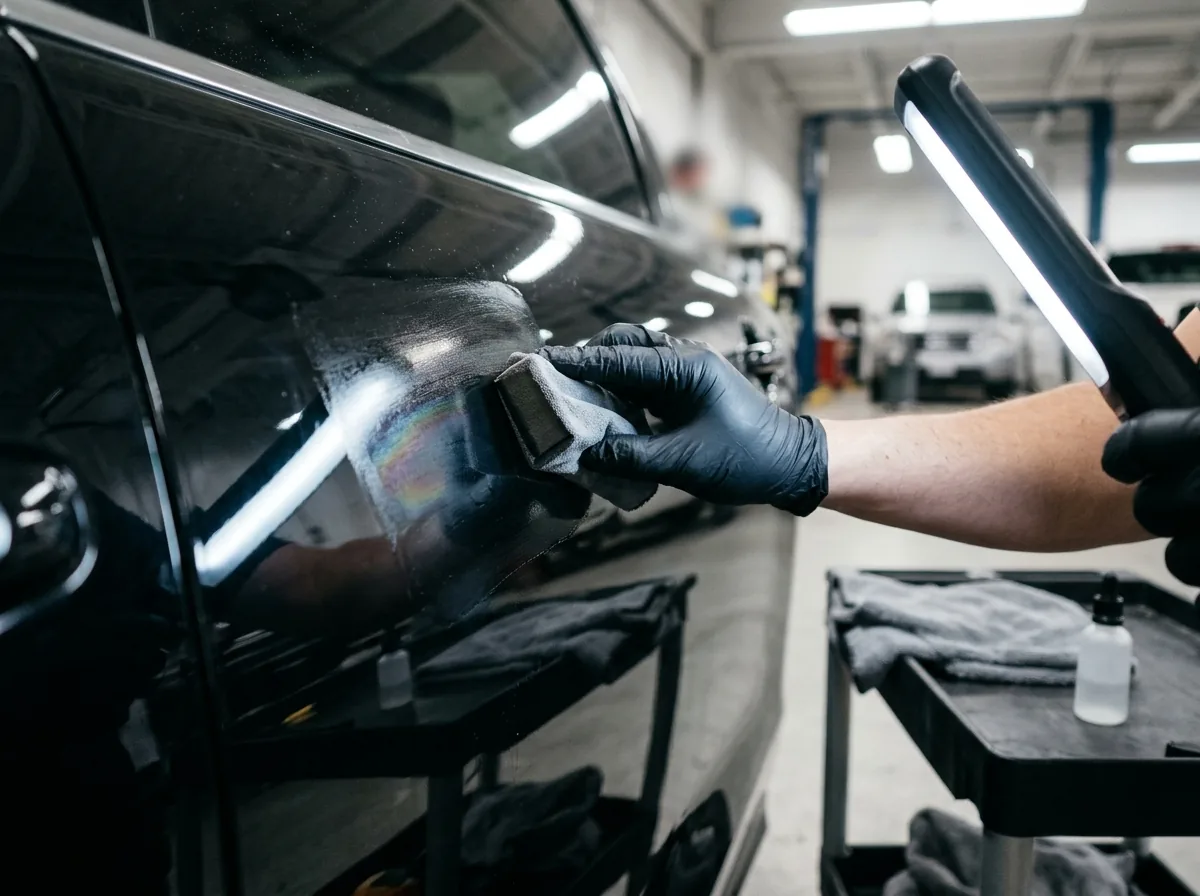
A cutting compound removes the defects, then a separate finishing polish refines the surface and brings back the depth of the gloss. Between stages the paint is checked under bright and raking light to see whether the defect is really gone.
- Polishing time: about 6 to 10 hours, depending on size and condition
- Typical result: 80 to 95% or more of visible defects removed
Multi-Step Correction With Spot Wet-Sanding
For deep marks, heavy oxidation, acid-rain damage or holograms left by earlier bad machine work, the work adds decontamination, extra compound passes and sometimes wet-sanding with fine abrasive paper. Wet-sanding followed by polishing is also the only way to flatten factory orange peel; standard correction leaves that texture alone.
- Polishing time: 12 hours at the low end and 20 or more on bad paint, which can mean leaving the car for days
Etched Water Spots and Acid-Rain Marks
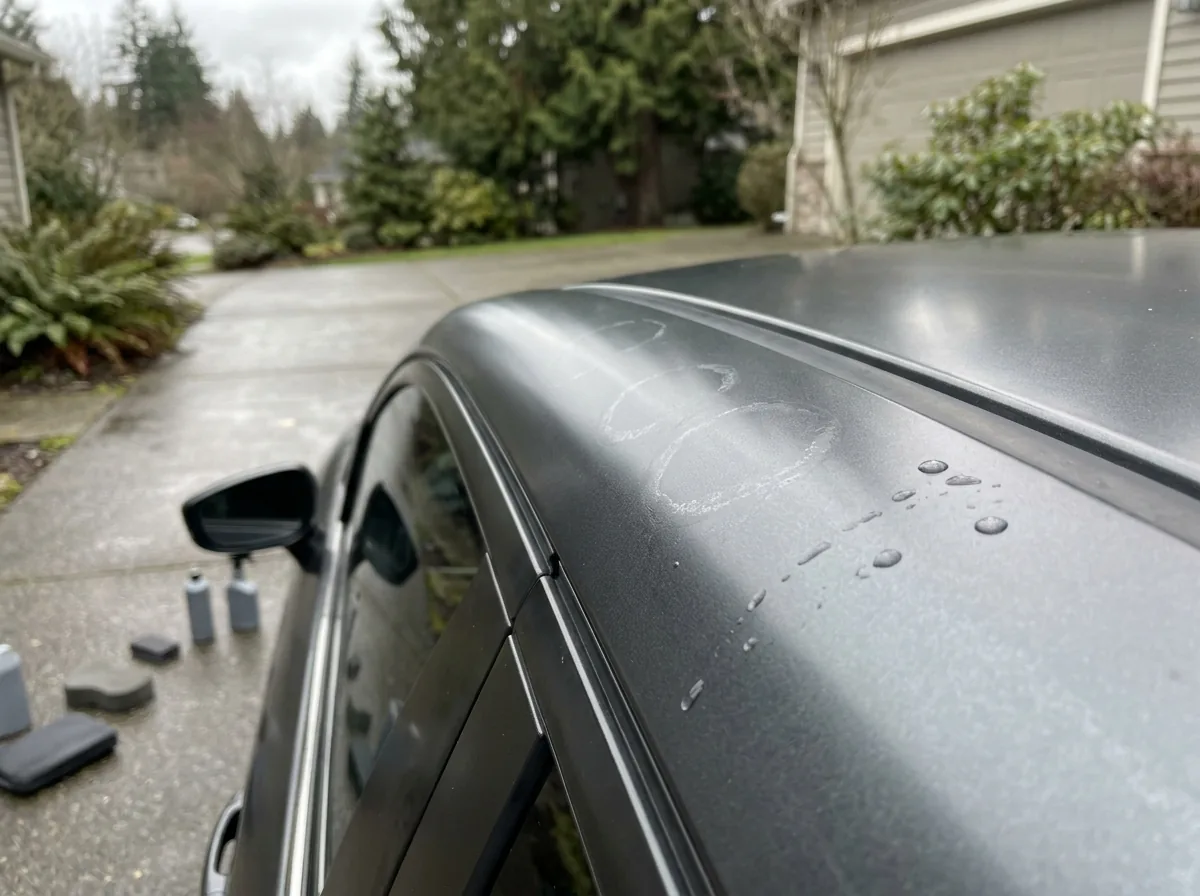
Water spots start as minerals left behind when a drop dries, from sprinklers, hose water or rain. Fresh ones sit on top and come off with a wash, a mild acid like vinegar, or clay. Left long enough, they etch into the clear coat: one detailing educator describes these as craters with edges that angle down into the paint. An etching is removed only by abrading the surface around it, which is correction work. Spots on a car that's already coated are a different job; see ceramic coating maintenance.
Black and Dark Paint That Shows Every Swirl
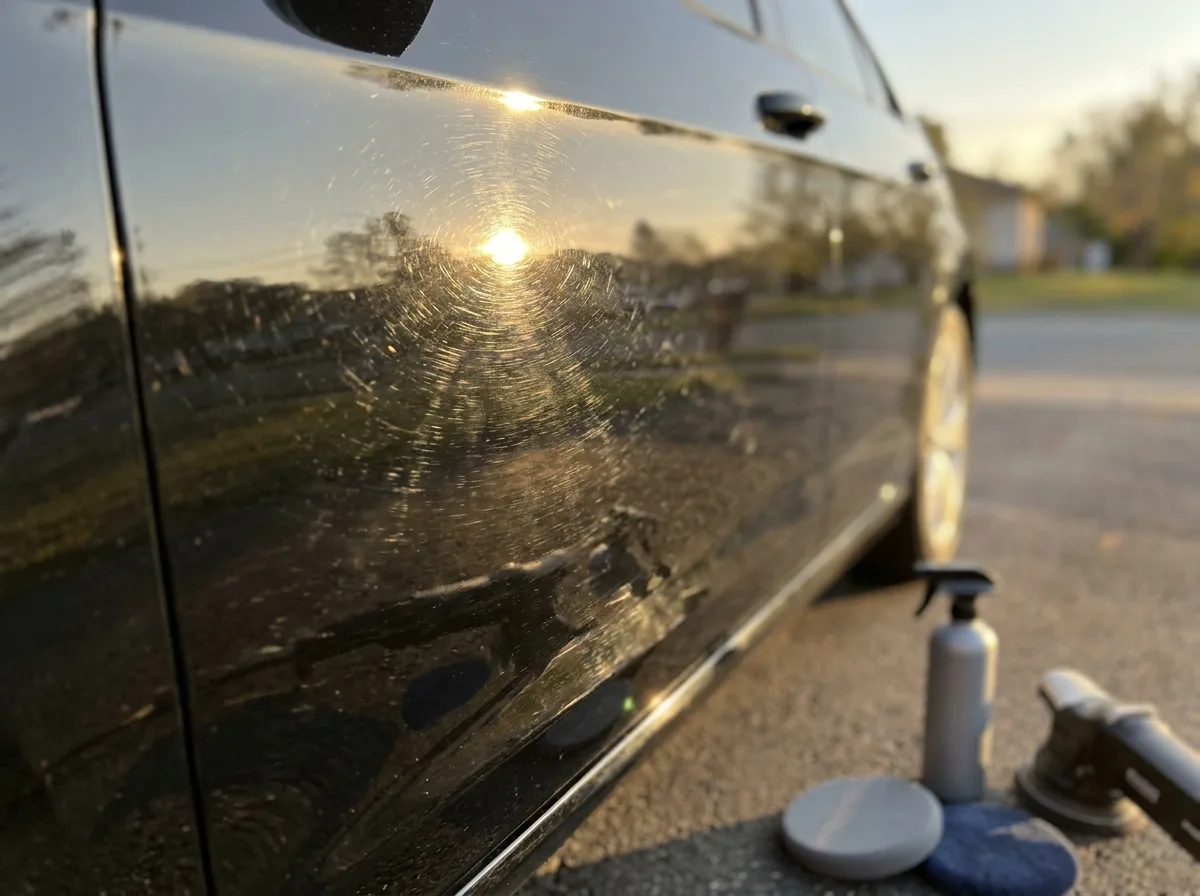
Black and dark blue show swirl marks and fine scratches far more than light or metallic colors, so the same car can look fine in silver and terrible in black. Dark paint is where the gap between one step and two shows most. A detailer's column puts it in capitals for owners who can't live with swirls: ask for, and pay for, two stages.
Oxidized and Single-Stage Paint on Older or Classic Cars
Older and classic cars often wear single-stage paint: color and gloss in one layer, no separate clear coat. One detailing educator describes it as prone to oxidation, thin, soft and fragile, which shows as a chalky white film even on red or blue paint. Light oxidation polishes off, but an aggressive compound can go through thin old paint before anyone sees it happen. Some finishes can't be saved: he notes that most single-stage metallic silvers can't. Ask how the shop tests a small area first.
Why Kent car, truck, boat and RV owners call Ceramic Coating Kent
- Sending a request costs you nothing, and you decide whether to book
- It reaches one independent local shop, never a list of bidders
- Ask for a paint-depth reading and an inspection before correction is priced
- Ask which coating goes on and whether the maker has the warranty registered
- Plan for a week or two without washing while the coating cures
What Correction Costs and How Long Each Level Takes
A polish maker's guides and a detailer's column sit far apart on price, so treat the table as a spread rather than a menu. Hours for each level are in the sections above.
| Level | Maker's guide | Detailer's column |
|---|---|---|
| One step | $150-$300 | $500-$800+ |
| Two step | $300-$600 | $1,000-$2,000+ (two or more stages) |
| Multi-step | $800-$1,500 | (included in the line above) |
One maker's guide puts most professional jobs at 4 to 12 hours. Size moves the bill because correction is priced by time: a one-maker example is a single-stage job of three to four hours on a compact car that stretches past six on a truck, and shops price by size tier (more on truck and SUV coating). Defect depth adds stages, and location changes the labor rate.
We found these numbers in maker guides and detailer columns written for a national audience. None of them is a Kent price; that comes from the shop once it has the car under its lights.
What Polishing Can't Fix
Correction only levels the clear coat. It can't fix:
Scratches through the clear coat
into the color, primer or metal. Those need touch-up or paint; see scratch and chip repair.Rock chips
that have gone through the finish.Peeling or flaking clear coat
Once it has let go of the color coat, a respray is the only lasting fix.Matte and satin finishes
They have no gloss layer to level, so abrasive correction isn't used on them.
A full repaint is a different order of cost, from roughly $1,000 for basic work to $6,000 and up in Kelley Blue Book's range, so it's worth knowing which side of that line a panel is on before paying for polishing.
What a Correction Quote Should List
Get the quote in writing, and check that it states how many stages, whether decontamination (iron remover and clay) is in the price, which wax, sealant or coating follows, and whether it's the whole car or named panels. Two more things we'd ask for:
A paint depth reading
A gauge measures how much clear coat is left. Most professionals check it before quoting, according to one maker, and one detailer's column asks buyers whether a gauge is used to confirm correction is possible at all.A test spot
Polishing one small section first shows how far a given level gets on your paint before you commit to the whole car.
If a coating comes next, the correction is usually its own line on the quote. The ceramic coating overview covers that prep order.