
Paint Protection Film Choices, Panel by Panel and Film by Film
Film is sold by how much of the car it covers and by what the film itself is made to do. Settle the coverage first, then the film.
Partial Front: Bumper and the Leading Edge of the Hood
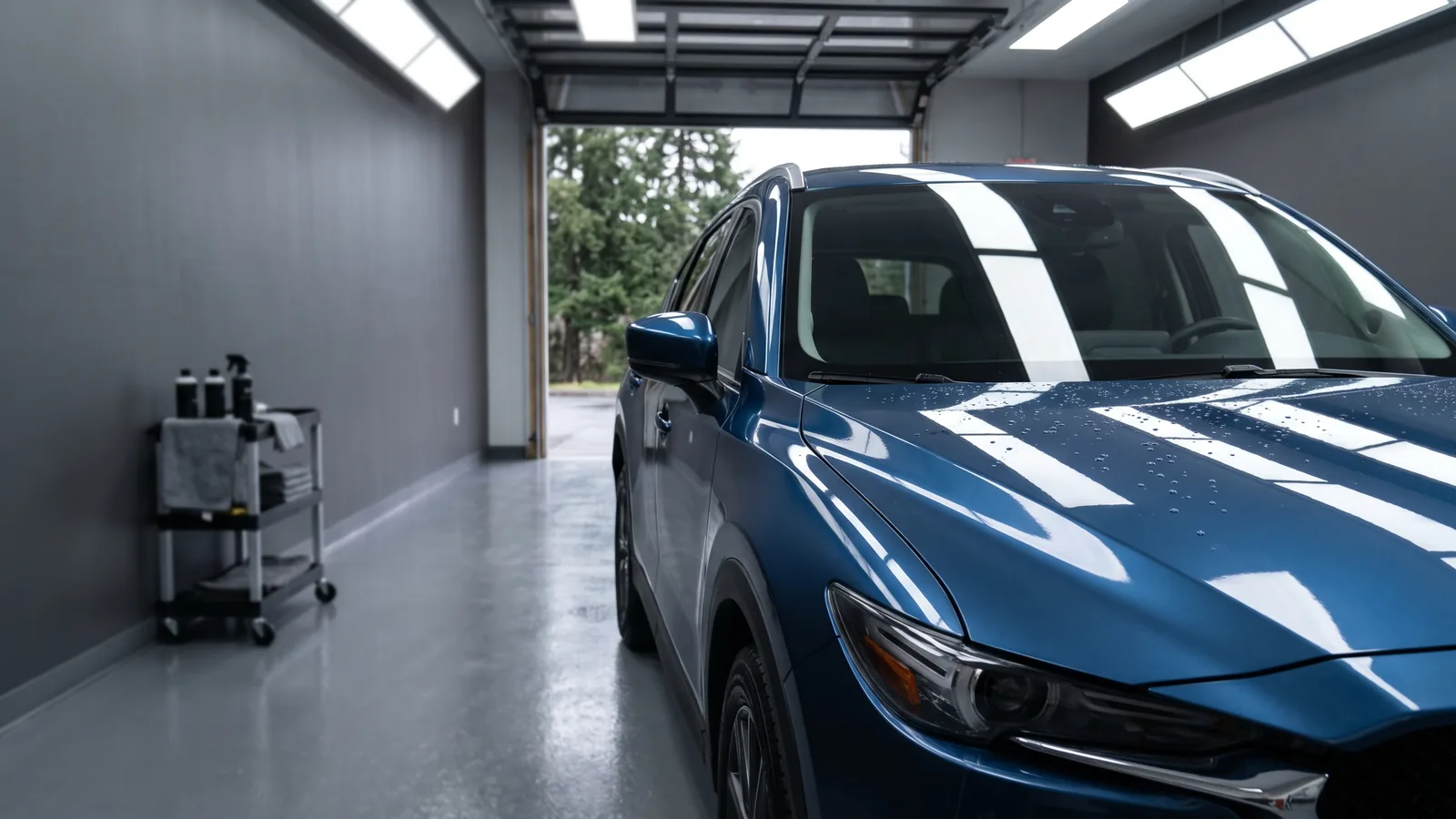
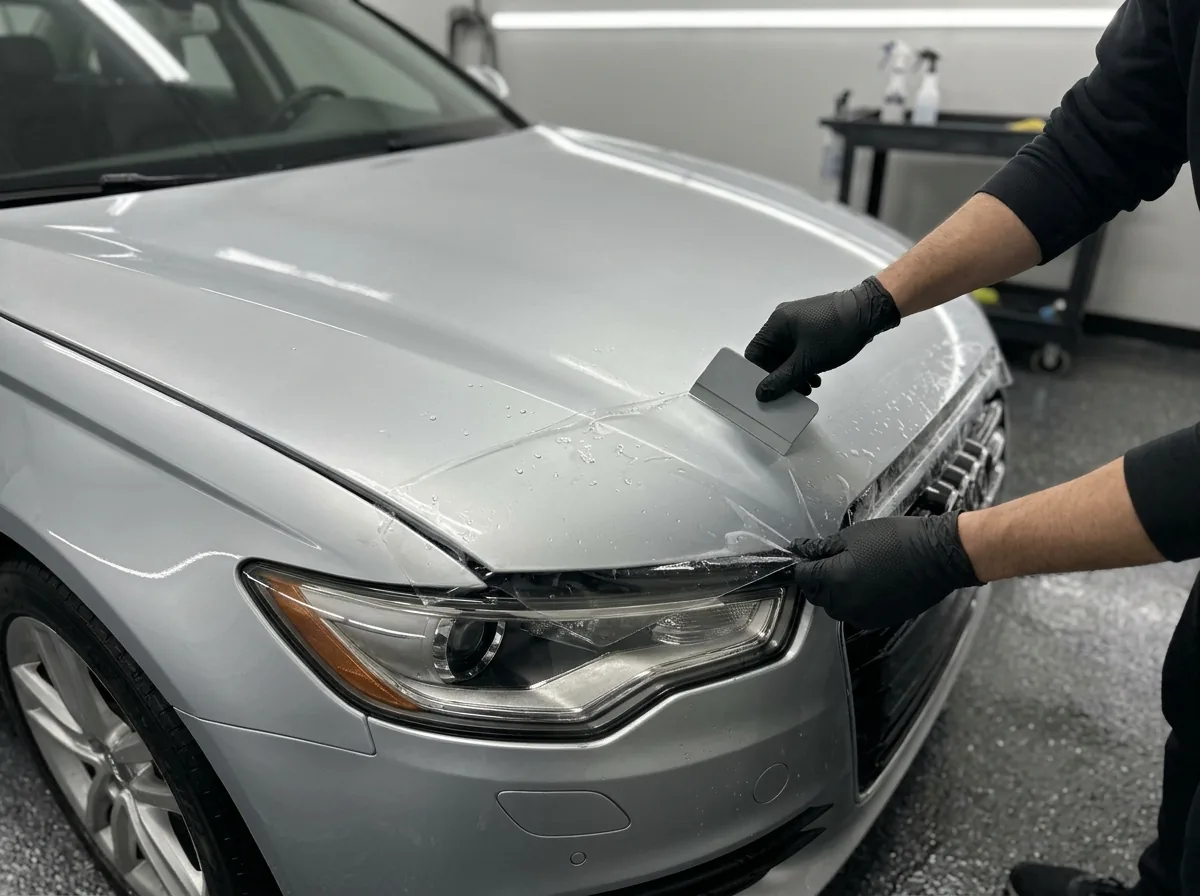
The smallest common job covers the front bumper and the first stretch of the hood, the surfaces that meet stones first on the freeway. Makers aim film at high-impact areas like the hood, bumpers, fenders and mirror caps. A partial hood leaves a film edge across the panel, so ask where that line will sit. The full front PPF page lists what a full front adds and how long a partial hood strip runs.
High-Impact Add-Ons: Rockers, Door Edges, Handle Cups and Luggage Ledges
Beyond the front, film can go on smaller pieces: rocker panels, door edges, the cups behind the door handles and the top of the rear bumper where bags get dragged over it. One film maker lists keys and sand alongside rocks among what marks paint. Ask for each piece priced as its own line so you can drop the ones you don't need. Film goes on in sections, so a damaged piece can be replaced without touching the rest. For a truck that sees gravel roads or job sites, ask about truck and SUV film in the heavier gauge.
Film Thickness: Standard 8-Mil vs 10-Mil Heavy-Duty
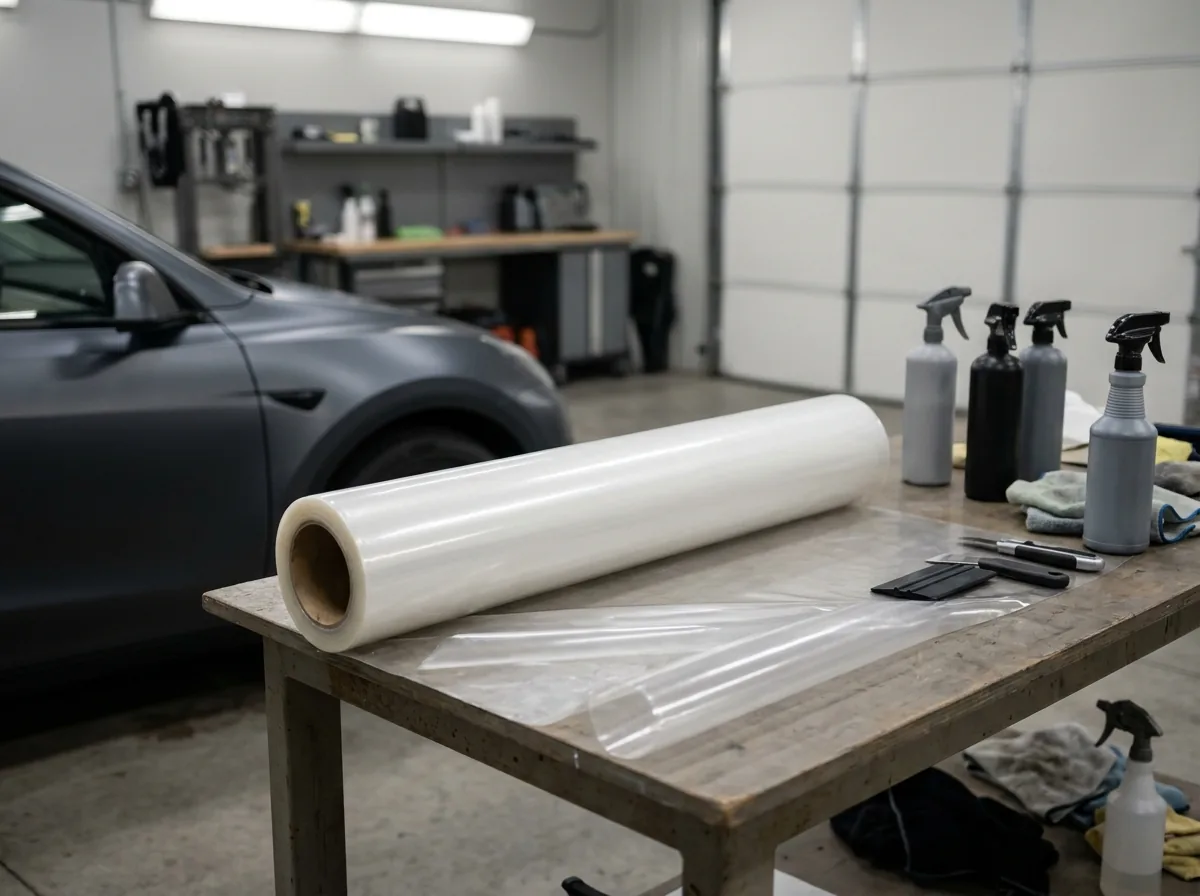
Thickness is the number to compare on two quotes:
- About 8 mil: the standard grade. One large maker's current films are listed at 7.5 to 7.9 mil.
- 10 mil: heavier film that Edmunds recommends for off-road driving or for cars that spend time at work sites. It is harder to bend around sharp angles, which adds labor.
- 2 to 4.5 mil: a typical vinyl wrap, which Edmunds says protects very little. A color-change wrap isn't film in this sense; see ceramic coating for vinyl wraps.
Self-Healing Topcoats and Hydrophobic Films
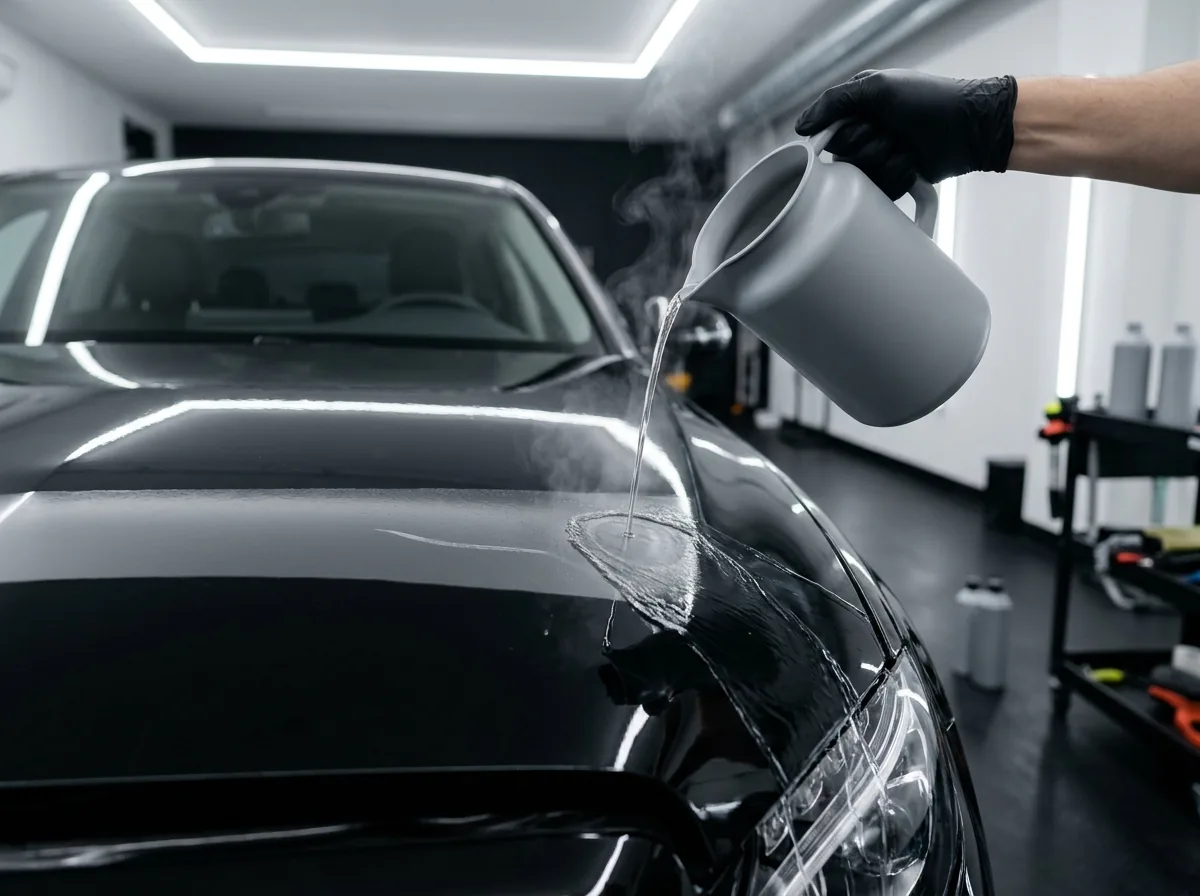
Premium films have a top layer that closes light scuffs when it warms up. One maker says light scratches in its film disappear in 20 to 30 minutes at room temperature, or faster with 120°F water; Edmunds mentions sunlight or a careful heat gun. A scratch that cuts through the film stays. Some films are also sold with a hydrophobic top surface so water and dirt rinse off more easily. If you also want a coating on top, the order of work is on ceramic coating over PPF. For a flat look, see matte and stealth PPF.
Pre-Cut Kits vs Custom Bulk Film With Wrapped Edges
Film makers sell cutting software with ready-made patterns for each model; one maker's library holds more than 80,000 of them. A pre-cut kit comes off the machine shaped to the panel. Custom work starts from a larger sheet that's fitted and trimmed on the car and tucked around the edges. Edmunds describes door panels, taillights and exterior trim coming off so the film can tuck between the seams, and in its own install the film was tucked around the edges until it was virtually invisible. One maker notes that removing parts gives a cleaner look but isn't required. Ask which method the quote assumes, which parts come off, and where you'll still see an edge.
Why Kent car, truck, boat and RV owners call Ceramic Coating Kent
- Sending a request costs you nothing, and you decide whether to book
- It reaches one independent local shop, never a list of bidders
- Ask for a paint-depth reading and an inspection before correction is priced
- Ask which coating goes on and whether the maker has the warranty registered
- Plan for a week or two without washing while the coating cures
What Film Costs and What Moves the Price
Coverage moves the number most. In Kelley Blue Book's numbers, front film with a ceramic coating comes in under $2,500. Full-car film runs about $4,000 to $7,000 in KBB's figures. Edmunds' full-coverage job on a small coupe came to $8,735 in 10-mil film. Prices by panel group are on the full front and full body PPF pages.
After coverage, these move the quote:
Film grade
10-mil and self-healing films cost more and take longer to fit.Parts removal
wrapped edges and tucked seams mean trim, lights or door panels come off.Paint condition
Edmunds' install began with a paint inspection, because clear film shows any flaw under it. Swirls get polished out first; see paint correction.Car value
on a cheaper car, Edmunds doubts full film pays off; the cutoff it gives is on the full front PPF page.
Everything above comes from national car media and film makers. Nobody publishes a Kent figure, so the real price comes from the shop after it has looked at the paint.
Film vs Coating: What Each One Stops
A ceramic coating is a hard, slick layer that bonds to the clear coat. It makes washing easier, but it doesn't make paint scratch-proof or stop rock chips. One detailer's column puts it bluntly: no coating prevents rock chips or key scratches, and clear film is almost twice as thick as the thickest coating claim. Film is a physical layer that takes the impact instead of the paint.
Film also outlasts a coating. Its 5 to 10 years or more compares with the 2 to 5 years most coatings are rated for; the homepage table compares wax, coating and film side by side. Edmunds also suggests a yearly inspection by the installer to see how the film is holding up.
If chips are the problem, buy film for the front. If you want easier washing and gloss on the rest, a coating covers that for less.
The First Week With New Film, and the Yellowing Question
Small water bubbles under new film are normal; one maker says most go away in a few days to a few weeks as the adhesive cures. The same maker asks owners to wait 48 hours before washing (72 for its colored film). After that, its care sheet asks for:
- a hand wash out of direct sun, about every two weeks
- no automatic tunnel washes
- a pressure washer at least 3 feet away, never aimed at a film edge
- a yearly inspection by the installer
Yellowing is mostly a story about older film. Edmunds notes that film has moved on from products that yellowed over time and became nearly impossible to remove, and current top-tier films from two large makers carry 10-year warranties against yellowing, cracking and blistering. Those warranties need a professional install, and one excludes damage from automatic car washes and any panel that wasn't re-filmed after a paint repair. If old film has already gone yellow, see PPF removal.