
Motorcycle Parts a Ceramic Coating Can Cover
A bike has little paint and a lot of everything else: metal that gets hot, plastic you look through, and finishes that can't be polished. Each part needs its own product.
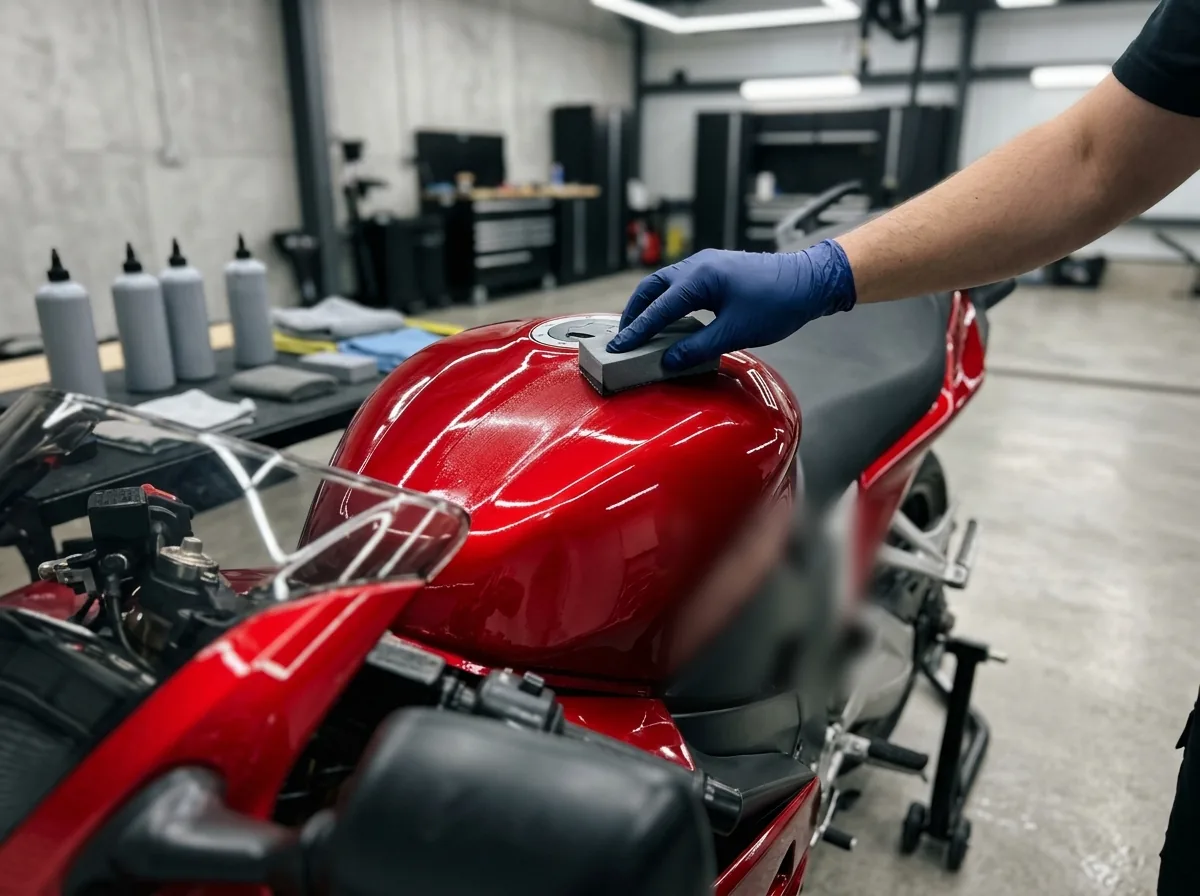
Painted Tank, Fenders and Fairings
The painted parts take a coating much like car paint, on a much smaller area: one maker's coverage chart says a 30 ml bottle coats two motorcycles, where the same bottle covers one mid-size car. The work is in the edges and curves, not the square footage.
- Polish first if needed: a coating seals in swirls, so a swirled tank gets polished first; see paint correction.
- Chips: a coating doesn't stop them; film does (paint protection film).
Matte and Flat-Finish Bikes
Matte paint changes the job. Harley-Davidson says its Denim (flat or matte) finish burnishes and mars with age and use, that scratches and scuffs in it can't be rubbed out, and that polishing makes it glossier over time. It recommends a dedicated matte cleaner for light dirt and a wash mitt for heavier deposits.
- No polishing prep: the gloss-paint routine above doesn't apply.
- Matte-safe products only: the matte and stealth PPF page covers coatings and film made for flat finishes.
Chrome, Polished Metal and Exhaust Heat
Pipes get far hotter than painted panels. One coating sold for wheels and calipers is rated by its maker to 1,400°F and can also go on exhaust tips. Ask what heat rating the product on your pipes carries, and whether chrome and polished covers are coated at all or left out.
Wheels and Brake Parts
Bike wheels sit open to view, spokes and hubs included, so brake dust shows. The high-heat coating above is sold for rims and calipers first, and its maker claims up to 18 months or about 45,000 km. Ask whether spokes and hubs are in the quote or only the rim faces. The wheel and caliper coating page goes through the wheel options in detail.
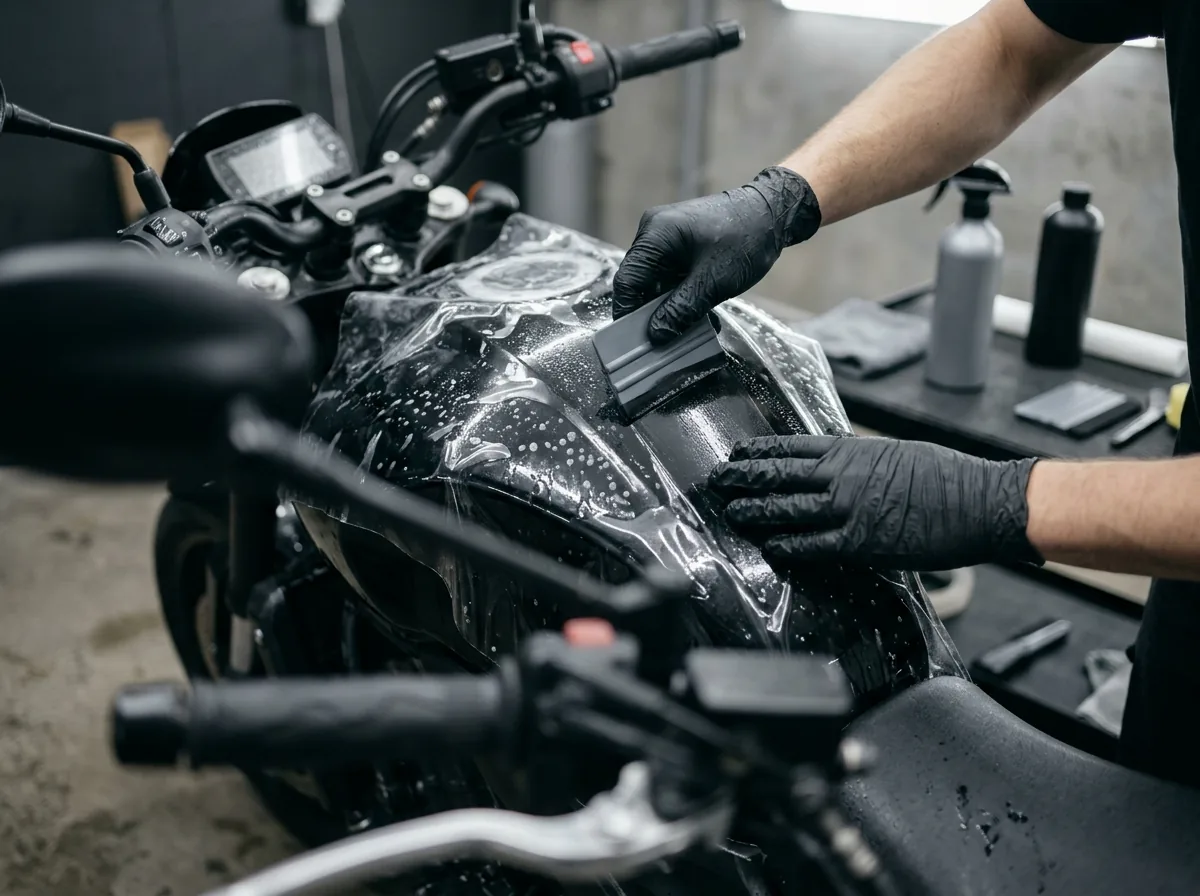
Windscreens and Gauges, Plus Film on the Tank
A windscreen is plastic, not glass. Dunlop explains that most are polycarbonate or acrylic, that polycarbonate scratches more easily, and that cleaners with ammonia or petroleum can damage them; a glass-cleaner type product can weaken the plastic and cloud it. Dunlop also says to skip brushes, scouring pads and paper towels and to wipe side to side. Anything that goes on the screen or gauge lenses has to be plastic-safe, so ask whether the product is made for polycarbonate or acrylic; the glass coating page is about car glass.
Tank film is the bike's version of front-end film. Film makers sell pre-cut kits for the tank, fenders, side cases, handlebars and screens, and one maker says its film heals minor scratches and won't yellow (its claim). That maker names the front fairing and tank as the places film earns its keep against chips and road debris, and suggests a coating for gloss and easier washing, so many bikes get both.
Why Kent car, truck, boat and RV owners call Ceramic Coating Kent
- Sending a request costs you nothing, and you decide whether to book
- It reaches one independent local shop, never a list of bidders
- Ask for a paint-depth reading and an inspection before correction is priced
- Ask which coating goes on and whether the maker has the warranty registered
- Plan for a week or two without washing while the coating cures
How a Motorcycle Is Prepped and Priced
Prep runs in the same order as a car: wash, decontaminate, polish what's glossy, wipe, coat. Two questions decide the quote on a bike:
Which parts
painted panels only, or also wheels, pipes, screen and metal trim. Each extra surface usually means a different product.On the bike or off
ask whether fairings and covers come off for coating or are done in place, since that changes the hours.
We couldn't find a car-media or maker price for a professional motorcycle coating, so we won't print one. A shop prices the bike in front of it, part by part. After the coating, the washing rules are the same as a car's; see coating maintenance.