
Headlight Lens Problems and the Fix for Each
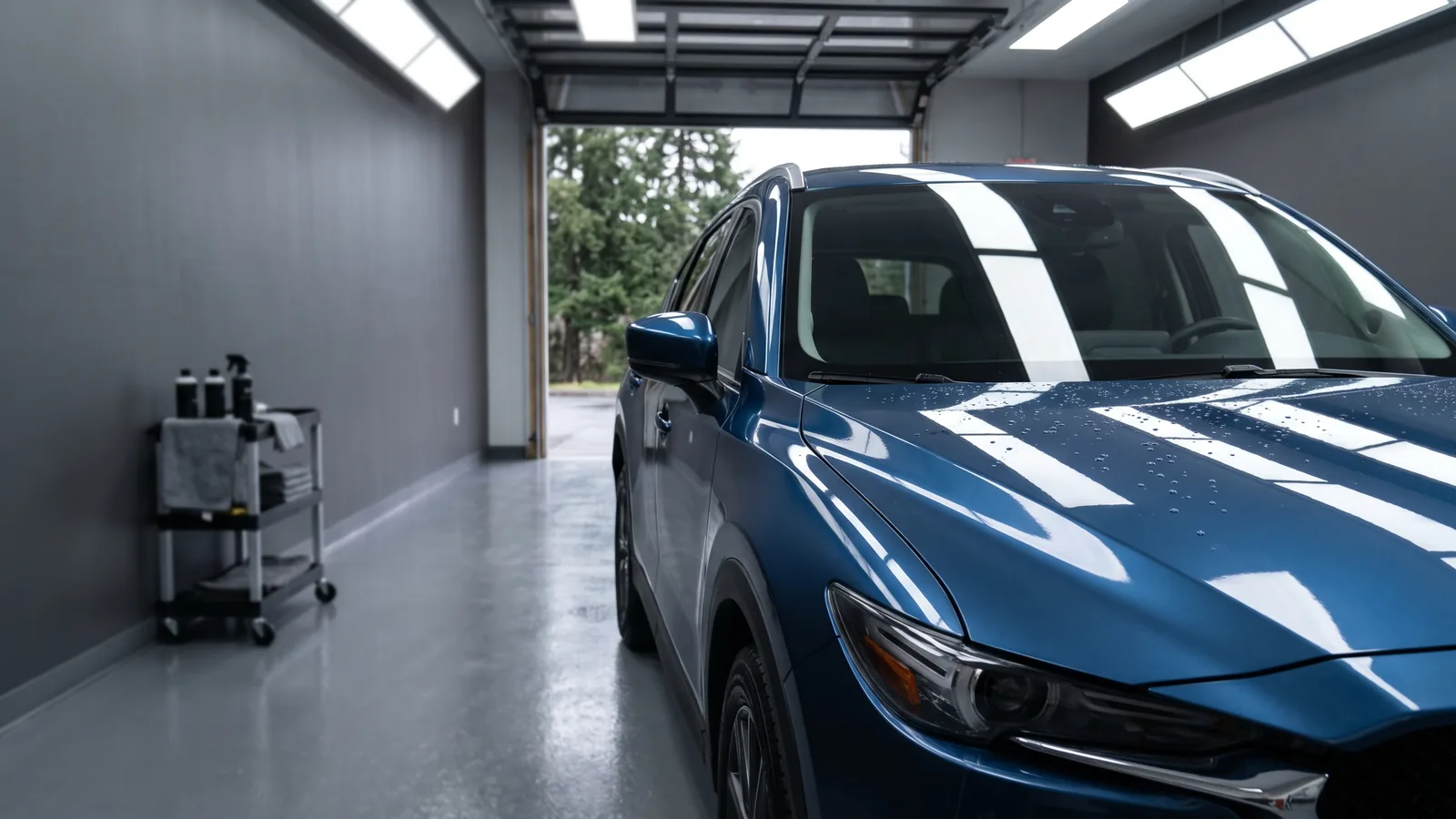
Most modern headlight lenses are polycarbonate plastic with a protective coating on the outside. Sunlight, weather and road grit wear that coating away, and the plastic under it yellows or hazes. The fix depends on how far that has gone.
Light Haze on a Lens That's Still Smooth
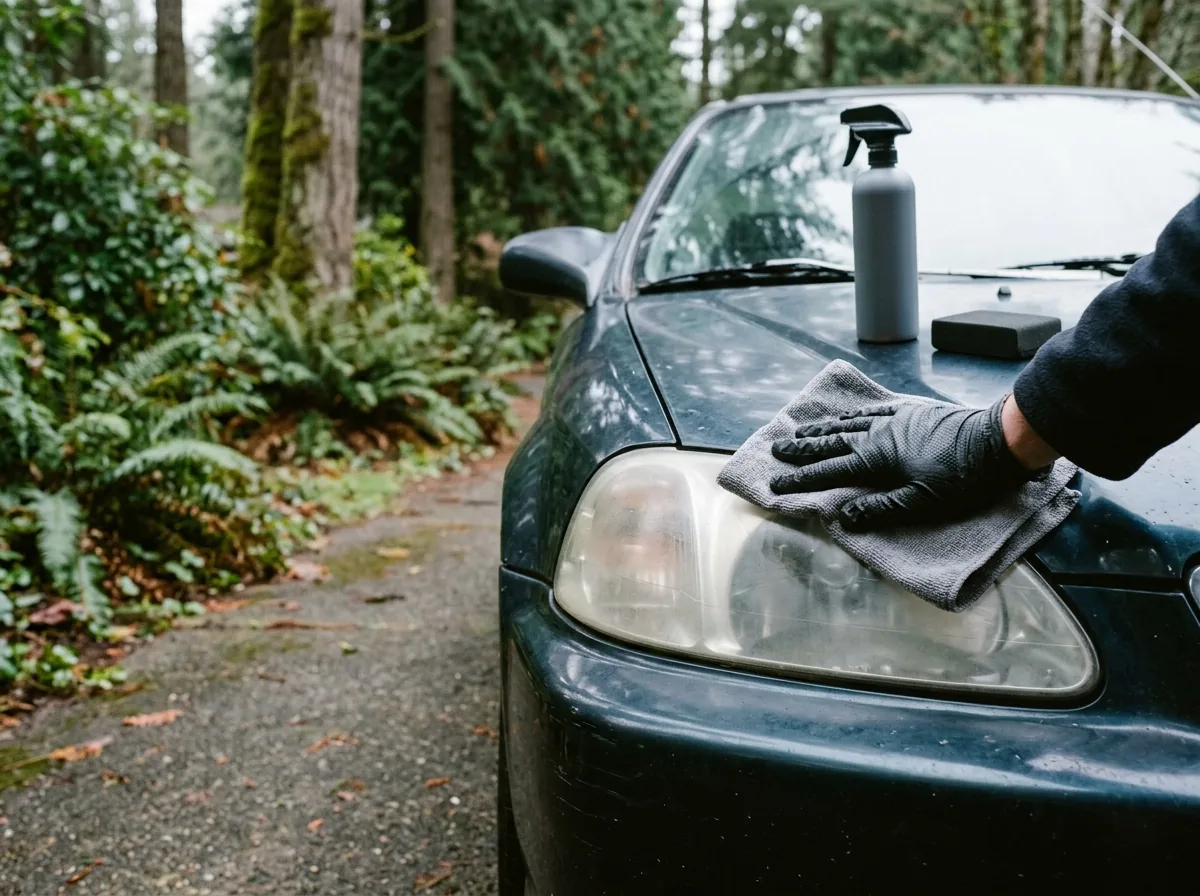
Start with a wash. AAA Club Alliance points out that dirt and road film can look like haze; if the lens is clear once it's clean and dry, it doesn't need restoring. Consumer Reports adds a warning for this stage: restoration products are abrasive and can damage a lens that doesn't need them. Light haze that stays after washing usually needs only a polish and a fresh UV layer.
Yellowed, Oxidized Lenses That Need Wet-Sanding
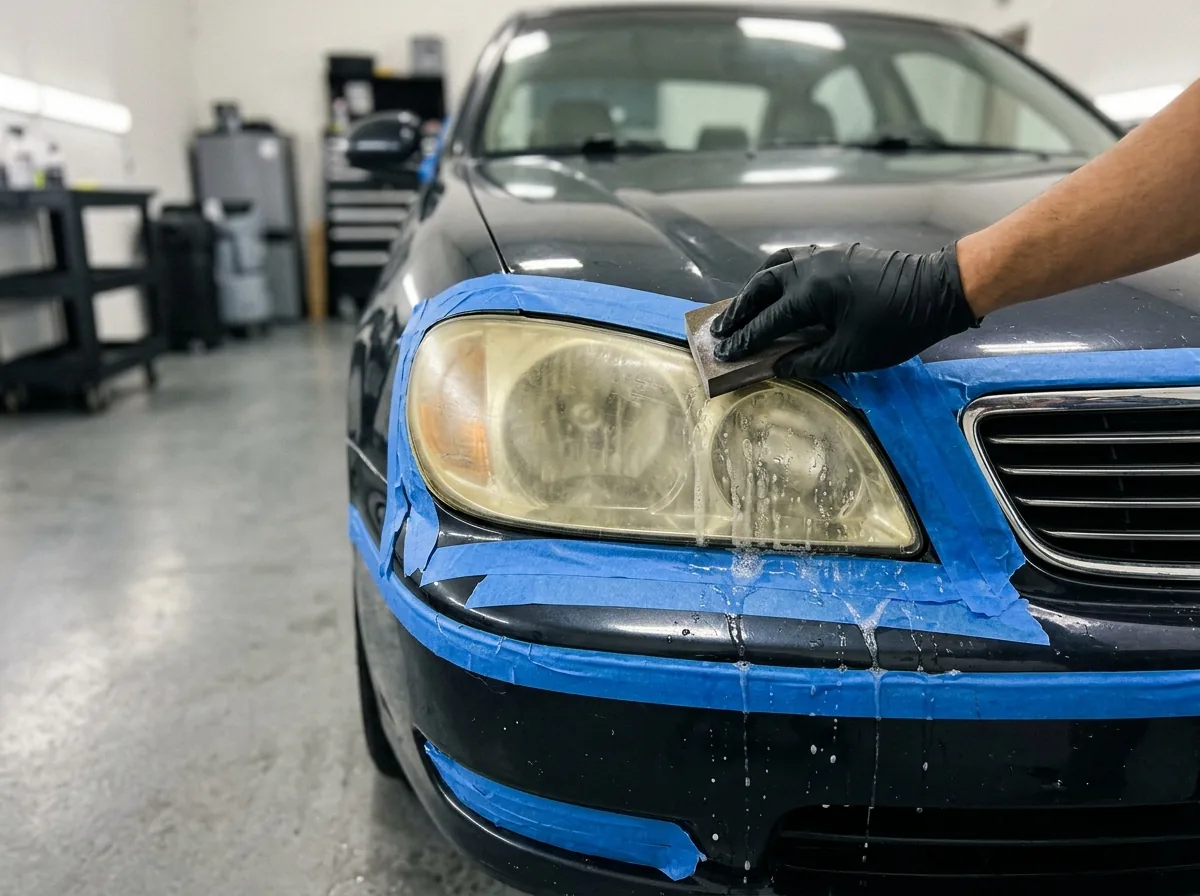
Once the coating has broken down and the plastic itself has yellowed, the dead layer has to come off. AAA describes the professional method it tested: power sanding to remove the original protective layer, then finer and finer grades of abrasive to polish the scratched plastic, then a protectant over the whole lens. Thumbtack's guide describes the same order with wet sanding. Ask the shop to tape off the paint and trim around the light first.
Crazed or Cracked Lenses That Polishing Won't Save
Fine cracks running through the plastic, peeling coatings that keep lifting, or water collecting inside the housing are beyond a polish. AAA Club Alliance says those lenses need a technician to assess the whole assembly, the bulbs and the alignment. If the lens can't be saved, AAA's testing found original-equipment replacement is the only route back to full light output.
Sealing a Restored Lens: UV Clear Coat or Ceramic Coating
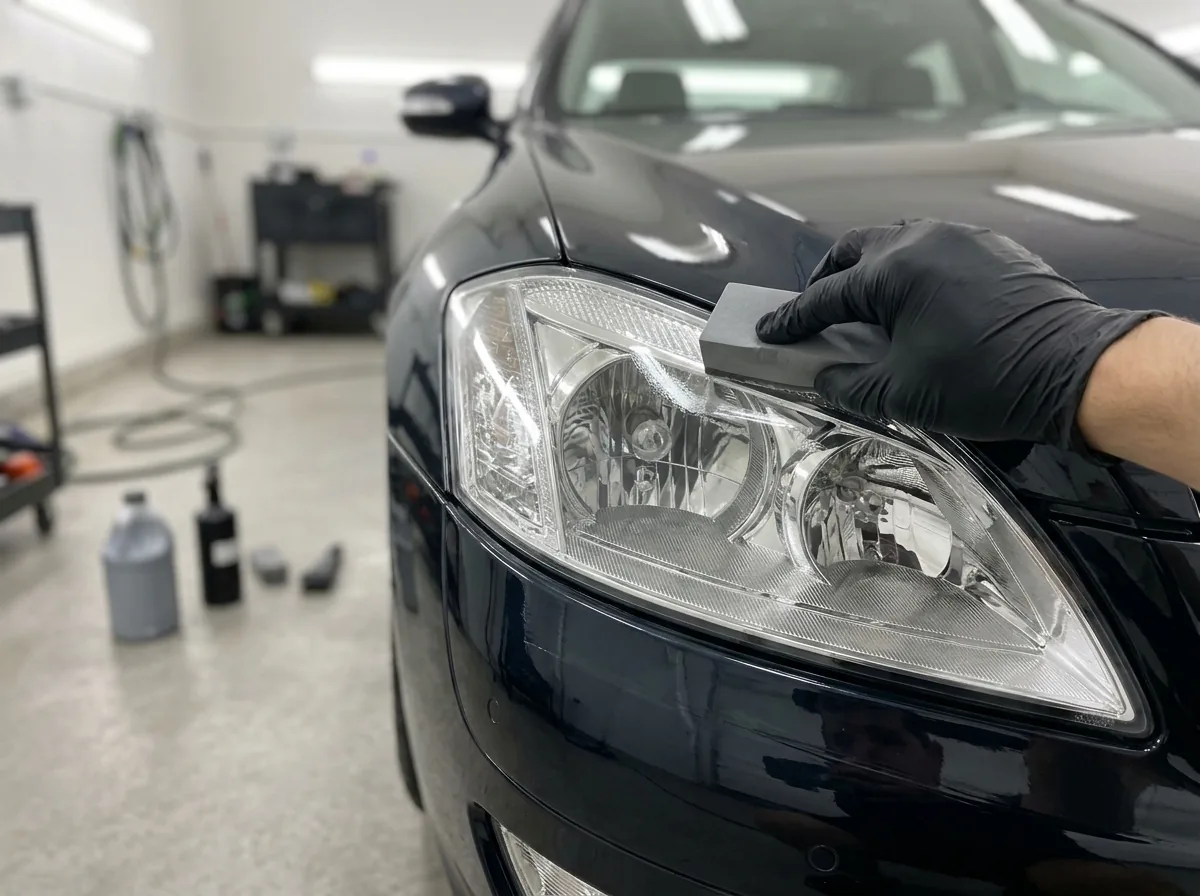
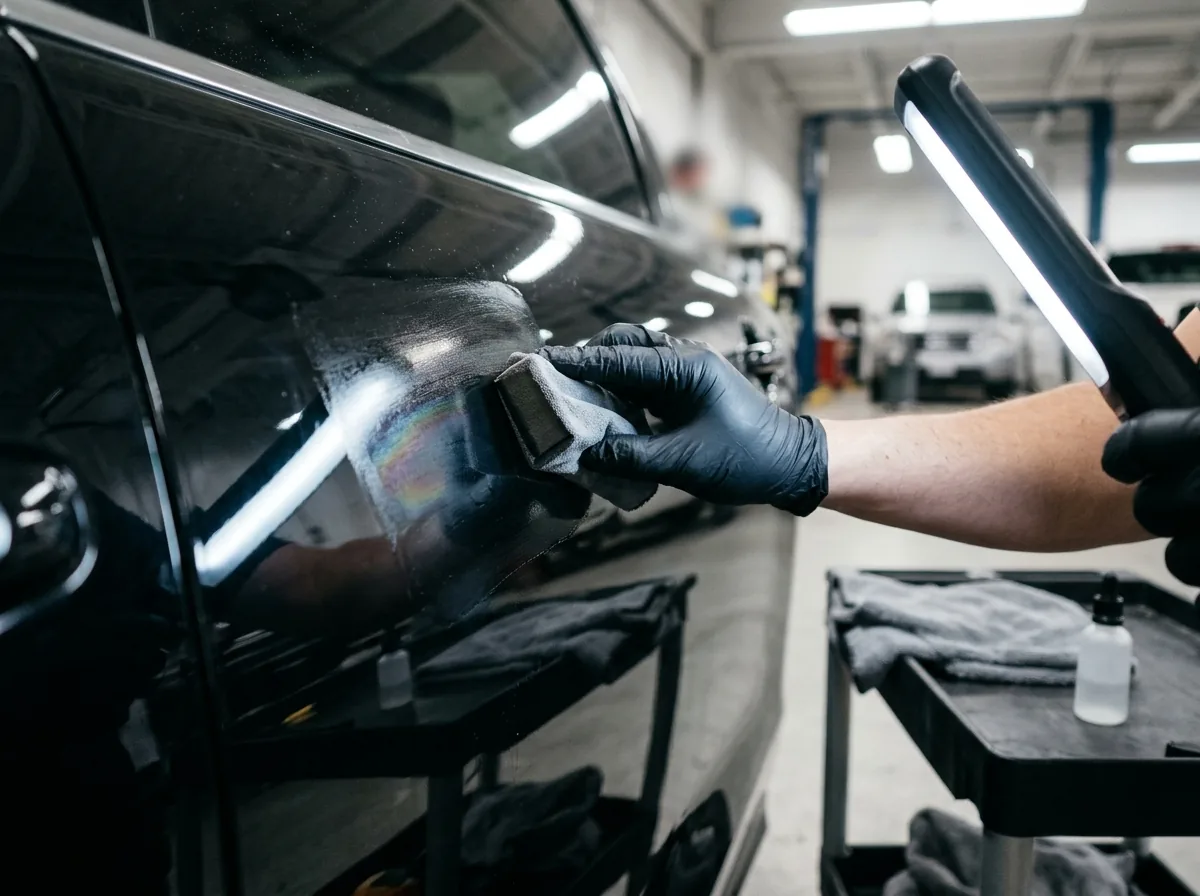
Sanding removes whatever UV protection was left, so the last step decides how long the result lasts. AAA Club Alliance calls the UV-protection step the one not to skip and says never to substitute a general-purpose clear coat for a product made for headlight lenses. Some coating makers also list headlights among the surfaces their ceramic coatings can protect. Ask which product the shop uses on lenses and how long it is rated for; Thumbtack notes a basic polish without a good sealer needs redoing sooner.
Clear Film on New or Restored Headlights
Paint protection film is also cut for headlights. One maker sells clear headlight film against chips, scratches and UV and says it typically lasts up to 10 years (its own claim). It works best on a lens that's new or freshly restored, since clear film shows whatever is under it. The same makers sell smoked versions; we'd stick to clear. Film thickness and care are covered on the paint protection film page.
Why Kent car, truck, boat and RV owners call Ceramic Coating Kent
- Sending a request costs you nothing, and you decide whether to book
- It reaches one independent local shop, never a list of bidders
- Ask for a paint-depth reading and an inspection before correction is priced
- Ask which coating goes on and whether the maker has the warranty registered
- Plan for a week or two without washing while the coating cures
What Headlight Restoration Costs, and How Long It Holds
The prices at the top of this page, $10 to $25 for a kit you spend under an hour on and $153 to $267 for a mobile technician, are close enough that price alone rarely decides it. A new headlight is the brightest result and costs far more than either. The bigger difference is how long each lasts. Consumer Reports found many kit-restored lenses hazing over again a year later, and a body shop it spoke with refinishes customers' lenses every year. Thumbtack puts the interval at one to three years, depending on the sealer and how much sun the car gets. A quote that includes a better UV layer can cost more and still work out cheaper over a few years.
Before you agree to a price, it helps to know:
Per pair or per lens
The averages above don't say, and a vehicle with separate high and low beam lenses has more plastic to sand.Which sealer goes on last
A dedicated UV coat for headlights, a ceramic product rated for lenses, or film, and how long each is rated for.When it can get wet
AAA Club Alliance tells owners to follow the product's curing instructions, including when the car can be washed or left out in the rain. In a Kent winter that matters.What happens if it hazes early
Ask whether a return visit is included and for how long.
The ranges here come from a consumer-testing magazine and a national booking marketplace. Neither tracks Kent shops, so the shop prices the job after it has seen the lenses.
If the plastic around the lights has faded too, black trim is on trim restoration and coating, and coated glass on windshield and glass coating.
Why a Cloudy Lens Matters at Night
AAA had an accredited lab test headlights from two popular sedans about 11 years old, following Federal Motor Vehicle Safety Standard 108. On low beam, the yellowed lenses put out just 22% of the light of new ones. AAA notes that half of all crashes happen at night, and that lenses can start to deteriorate in as little as three to five years.
That loss lands on lights that were already short of what drivers need. Consumer Reports says a driver needs at least 300 to 350 feet to see, react and brake at 60 mph, and earlier AAA research found halogen headlights fail to light unlit roads safely at speeds as low as 40 mph.
The federal standard explains why plastic lenses carry a coating at all. FMVSS 108 requires plastic headlamp lenses to pass an abrasion test, and plastic lens materials go through three years of outdoor exposure in Florida and Arizona, after which outer-lens haze can't exceed 30%. A restoration replaces that factory layer with an aftermarket one. In AAA's test, both the professional and the DIY restorations also threw more glare than federal criteria allow. Restoration is a big improvement on a yellow lens, but it isn't the same as a new one, and AAA's own advice is to replace when you can.