
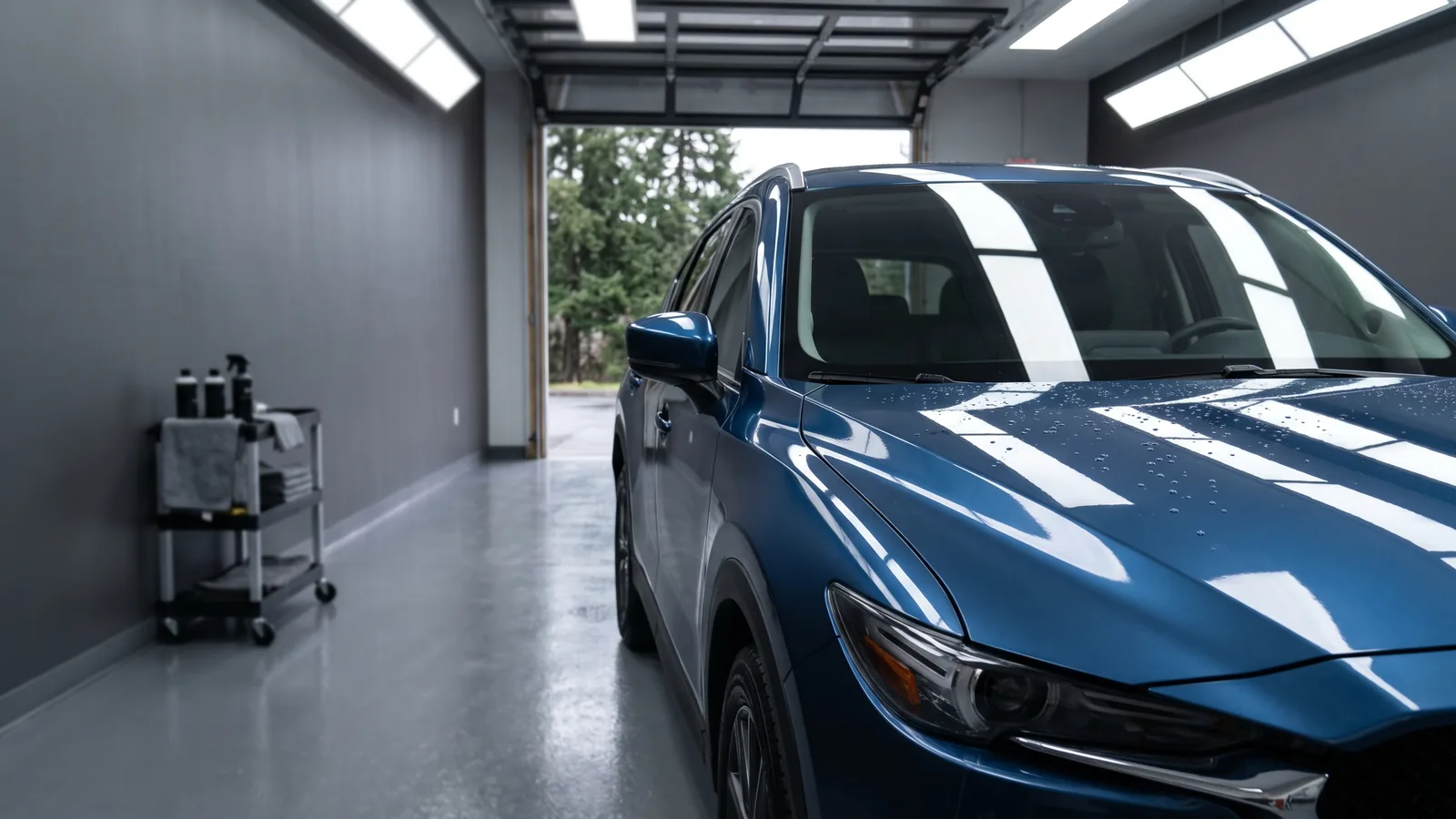
Matte, Satin and Colored PPF Options
All of these are paint protection film with a different top layer. Thickness, self-healing and lifespan are the same story as clear film, covered on paint protection film. What changes is the look and the care.
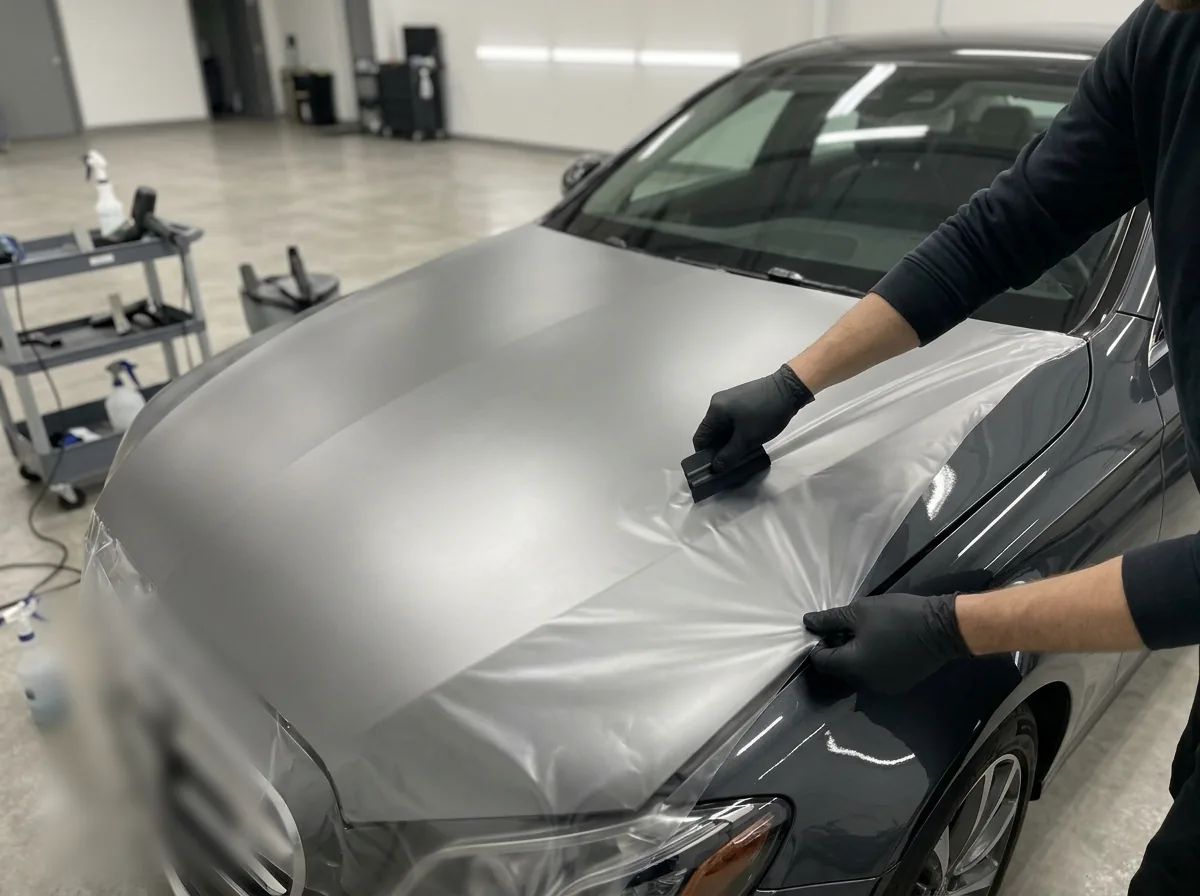
Stealth (Matte) Film Over Gloss Paint
"Stealth" is one maker's name for its satin film, and it's the word most people search for. Regular film is clear and keeps gloss paint glossy; satin film turns the same paint flat while still taking the chips. The paint underneath stays gloss, so the change can be undone later by PPF removal.
- Finish: satin or matte top layer over factory gloss paint
- Coverage: the whole car for a full change of look; a satin hood beside gloss fenders will show the line
Matte Film on Factory Matte Paint
Factory matte paint is a matte clear coat over the color, and Kelley Blue Book is blunt about repairs: scratches and chips can't be touched up or buffed out, so the whole panel gets repainted. Carmakers that sell matte paint warn owners off polish, wax and rubbing compounds, according to MotorTrend's interviews with BMW, Mercedes-Benz and Hyundai. That makes film the main protection. Clear gloss film would change the look, so satin film is the one that keeps it.
Satin Finishes
Satin sits between gloss and flat. Kelley Blue Book compares matte finishes to house paint, with a graduated range of sheen, so "matte" on one car and on another may not mean the same thing. Ask to see the film on a sample panel next to your paint before the whole car is done. One film maker also suggests its satin film for brushed metal trim, where clear film would add gloss.
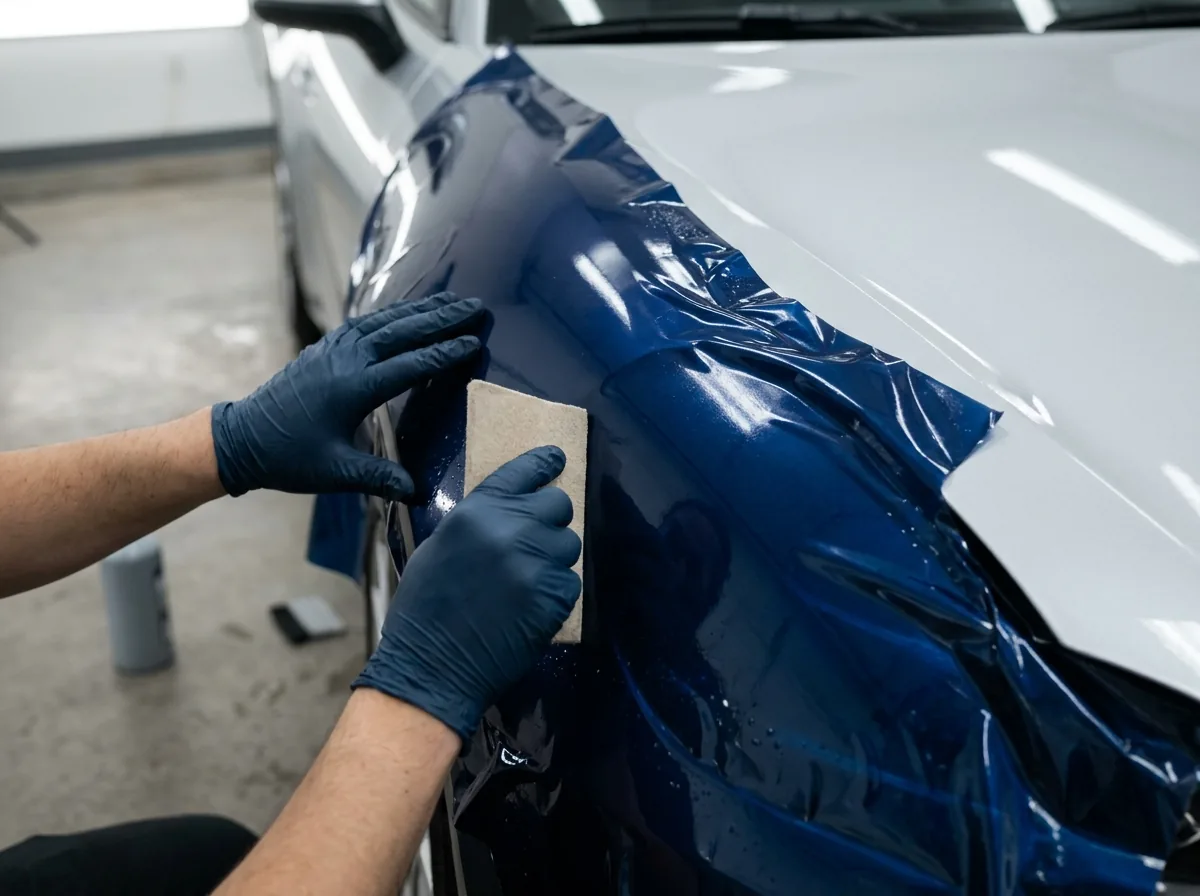
Colored and Tinted PPF
Colored film changes the color the way a vinyl wrap does, but it's protection film underneath. One maker's description of its colored film:
- Thickness: 60% thicker than vinyl wrap, and self-healing
- Finishes: gloss, satin and metallic
- Rated life: up to 10 years with care; a 10-year defect warranty
- First wash: 72 hours after install
- Panel repairs: a replaced panel may not exactly match aged film beside it
Vinyl wrap is much thinner and protects little. If the car is already wrapped and you want it coated instead, see ceramic coating for vinyl wraps.
Matte-Safe Coatings and What Not to Use on Flat Finishes
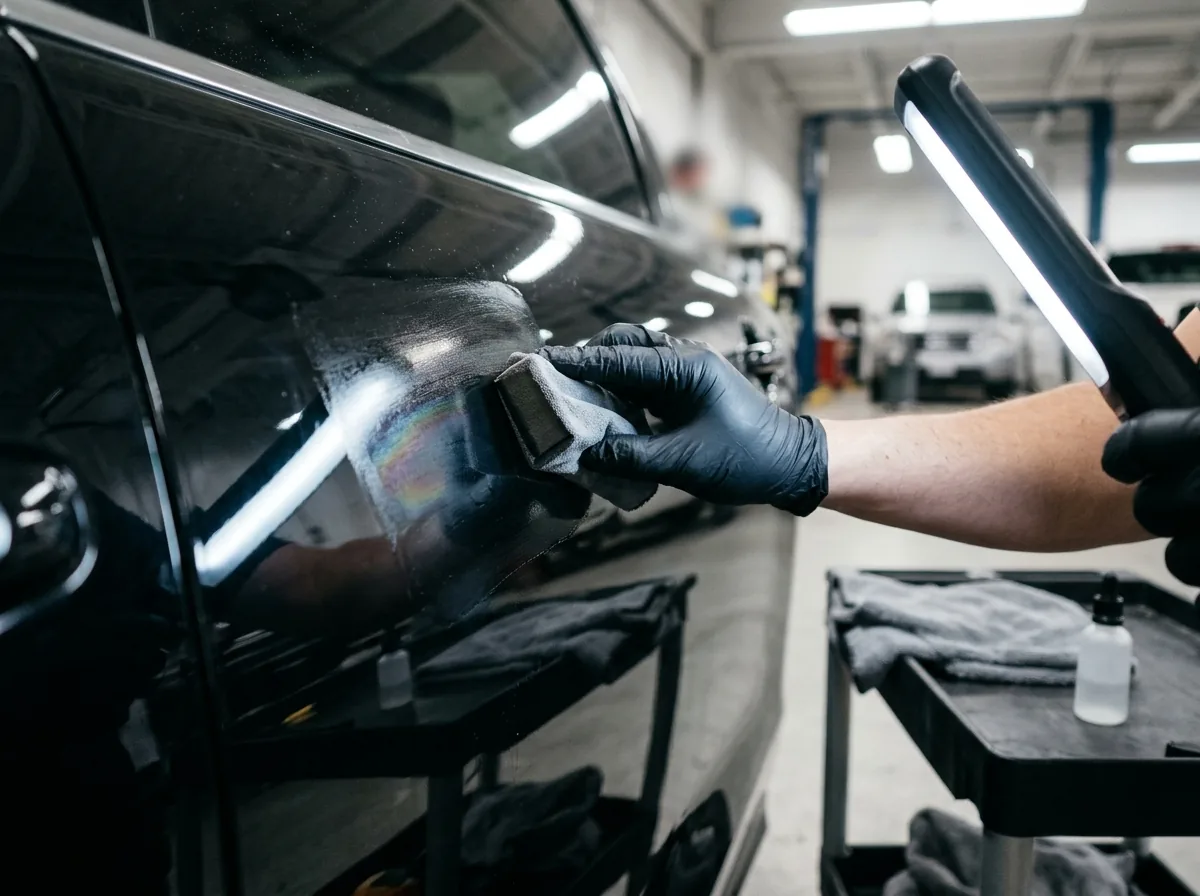
A coating can go on satin film or matte paint if it's made for flat finishes. Kelley Blue Book explains that matte coatings follow the contours of the surface instead of filling them, so the finish stays dull. One film maker says a coating on its satin film won't make it shiny. Not every coating warranty agrees to cover it: one coating maker's terms exclude matte and non-clear-coated finishes. Ask which product goes on and whether its warranty covers matte. Pairing film and coating in general is on ceramic coating over PPF.
Why Kent car, truck, boat and RV owners call Ceramic Coating Kent
- Sending a request costs you nothing, and you decide whether to book
- It reaches one independent local shop, never a list of bidders
- Ask for a paint-depth reading and an inspection before correction is priced
- Ask which coating goes on and whether the maker has the warranty registered
- Plan for a week or two without washing while the coating cures
Matte PPF Cost Next to Gloss Film and Matte Paint
We didn't find a car-media or maker figure for how much more satin film costs than clear. KBB's general film numbers are the closest guide: under $2,500 for front film plus a coating, about $4,000 to $7,000 for the whole car, and Edmunds has seen jobs above $8,000. For a car you want matte all over, plan on full-body pricing; see full body PPF. Ask for clear and satin quotes on the same panels so you see the gap for your car. Nobody publishes a Kent figure for satin film, so the written quote after the shop sees your paint is the only local number you'll get.
Compare that with the paint route. KBB lists factory matte options from $1,000 on a Hyundai to $3,250 to $6,500 on luxury models, and an aftermarket matte repaint can cost more because the car has to come apart. KBB's tip is that a matte film wrap looks about the same, protects the paint, and comes off.
Matte PPF Care: No Wax, No Polish
Most of matte care is what you leave out. Kelley Blue Book's first rule is never wax a matte finish, and its second rule is to follow the first. From KBB, MotorTrend's carmaker interviews and one film maker's care sheet:
No wax, no polish, no compound
They fill the texture and leave shiny patches; most car-wash soaps contain waxHand wash only
Brush washes scratch matte surfaces, and the damage is usually permanentTwo buckets and clean microfiber,
with a separate mitt for wheelsDroppings, sap and bugs off right away,
soaked first, never scrubbed48 hours
before the first wash on new satin filmA satin-safe sealant about every 6 months,
per one maker's sheet
Kent's wet months mean a lot of washing; SeaTac averages about 156 days a year with measurable rain. Water spots should come off quickly on any matte surface, so dry the car after it's washed rather than letting it air-dry.