
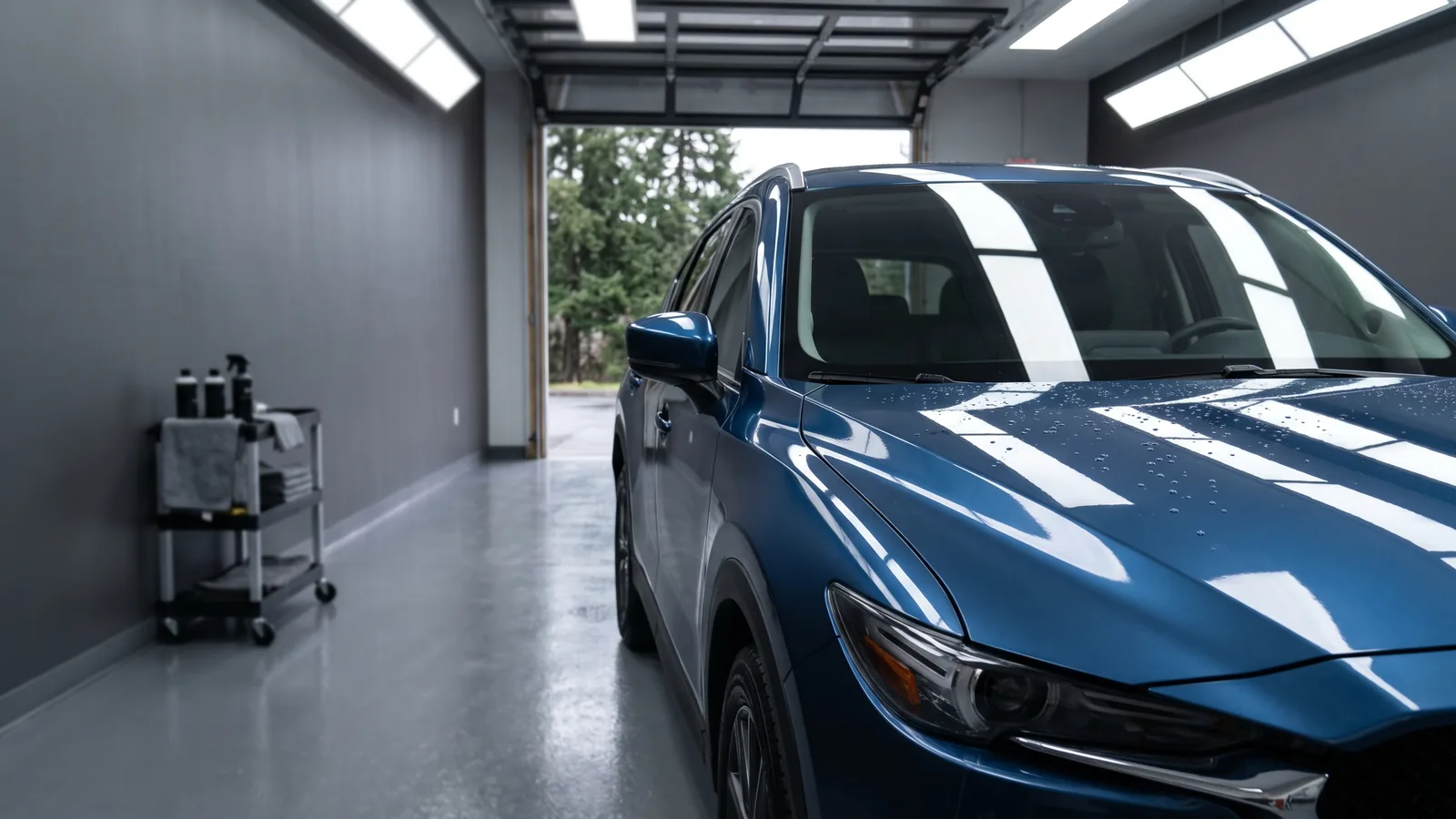
RV Ceramic Coating by Body Type
An RV quote starts with length and then turns on what the body is made of. One rig can carry gelcoat fiberglass, clear-coated aluminum and vinyl graphics, each with its own maker's rules.
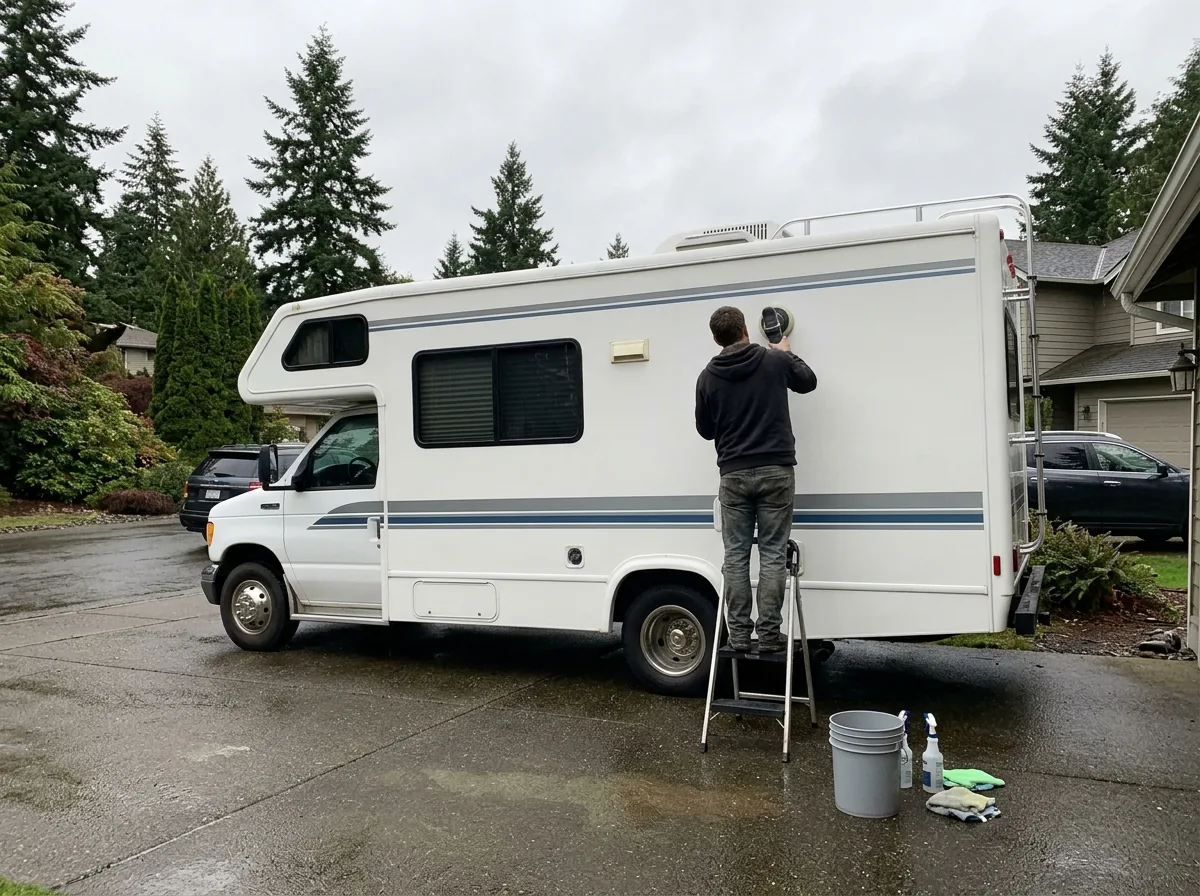
Fiberglass Motorhome Sidewalls
Most fiberglass sidewalls are gelcoat, the same finish as a boat hull (the boat coating page explains how it oxidizes). Crane Composites, which makes Filon panels, says sunlight, heat and moist air fade gelcoat and cloud it. Its care sheet asks for:
- A monthly wash with mild detergent, avoiding abrasive, caustic or ammonia cleaners, which can discolor the panel and weaken its UV resistance.
- Wax once or twice a year, more often if the RV is stored outside.
- Compounding when washing and waxing no longer bring the finish back.
A coating takes the place of that wax, but only on a sidewall that has been compounded clean.
Front Caps and Gelcoat Fiberglass
The front cap faces the road, so it collects the bugs and tar. Crane says to remove tar, bugs, sap and bird droppings promptly to stop staining. For severe stains it goes as far as light sanding with 800-grit paper, then compound and wax. Expect the cap to need more prep than the sides, and ask for it as a separate line.
Aluminum-Sided Travel Trailers
Aluminum trailers split two ways. Airstream says its late-model trailers have a clear coat and should be washed with a mild auto detergent safe for clear-coated surfaces, and it recommends different polishes for trailers with and without one. A clear-coated aluminum body can take a paint coating much like a car. Bare, polished aluminum is a metal job, and the quote should name a product made for it. Airstream also suggests washing in six-foot sections on a cloudy day and checking roof seals and rivets as you go.
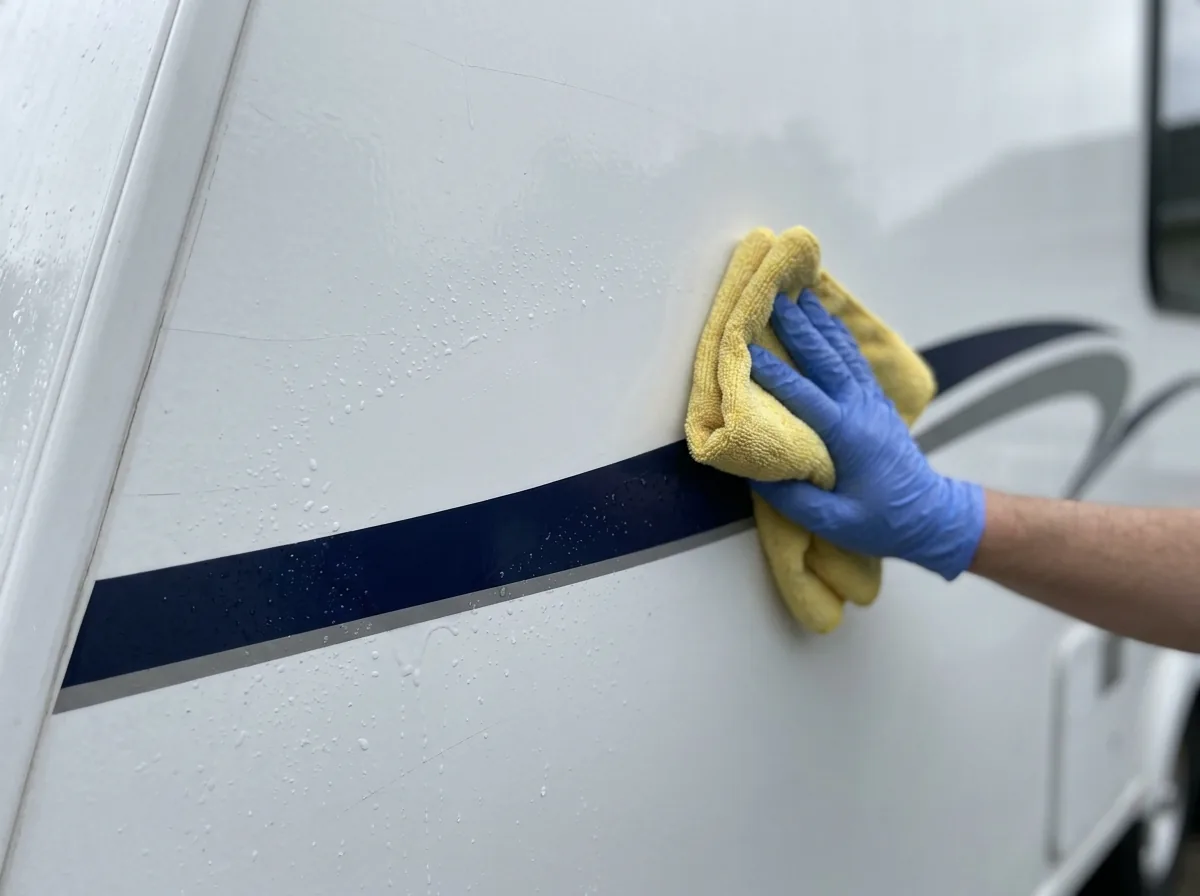
Decals and Graphics
Graphics are vinyl, not paint. Winnebago explains that cast vinyl, about 2 mil thick, typically lasts 7 to 9 years, and cheaper calendered vinyl is about 4 mil. Vinyl is soft and porous. Winnebago's care points:
- Don't wash in direct sun or extreme heat; plastic shocks and micro-cracks.
- No brushes, and keep a pressure washer wand several feet off.
- No solvent-heavy polish or wax; solvents can shrink the vinyl and make it brittle.
Coatings for vinyl are covered on the vinyl wrap coating page.
Fifth Wheels, Toy Haulers and Truck Campers
Towables bring a second vehicle into the quote. A fifth wheel or toy hauler comes with the truck that tows it, and a truck camper rides on a pickup the shop may be coating too; see truck and SUV coating. On the coating maker's chart, a 25-foot RV takes twice the product of a full-size truck and a 45-foot rig four times. If the camper comes off the truck, ask whether both are quoted together.
Why Kent car, truck, boat and RV owners call Ceramic Coating Kent
- Sending a request costs you nothing, and you decide whether to book
- It reaches one independent local shop, never a list of bidders
- Ask for a paint-depth reading and an inspection before correction is priced
- Ask which coating goes on and whether the maker has the warranty registered
- Plan for a week or two without washing while the coating cures
The Roof and Seals Are Their Own Job
The roof is a membrane or a fiberglass sheet, not the sidewall finish. Dicor, which makes EPDM rubber roofing, says to clean it at least four times a year and warns against petroleum solvents, harsh abrasives and citrus cleaners, which can ruin the membrane or void its warranty. Crane adds that the wall system has to stay watertight, and moisture damage in the wall voids its warranty.
So a sidewall coating quote shouldn't cover the roof by default. If you want the roof cleaned or treated, ask for a product approved for that roof, on its own line. Storage counts too: Crane recommends indoor storage, or a cover that doesn't trap moisture, which can leave darker gelcoat blushed.
RV Coating Prices, and Why Length Leads
No car-media guide, maker or agency publishes an RV coating price that we could find. What we can give is how the price is built:
Prep by the foot
one Florida detailer lists a one-step polish from $20 a foot and heavy-oxidation removal from $30 a foot, with the coating quoted separately.Product by length
the maker's chart runs from 80 ml at 15 feet to 200 ml at 45 feet.DIY scale
one maker's RV coating kits run from $449 for rigs up to 20 feet to $1,199 at the top of a range that goes to 40 feet.
Those are other states' shop prices and a maker's own product list. The number for your rig comes from a local shop that has walked around it and seen the gelcoat.