
Ceramic Coating Maintenance Services
Upkeep on a coated car comes in five kinds of visit, from a wash you can do yourself to taking the coating off and starting over.
Maintenance Washes
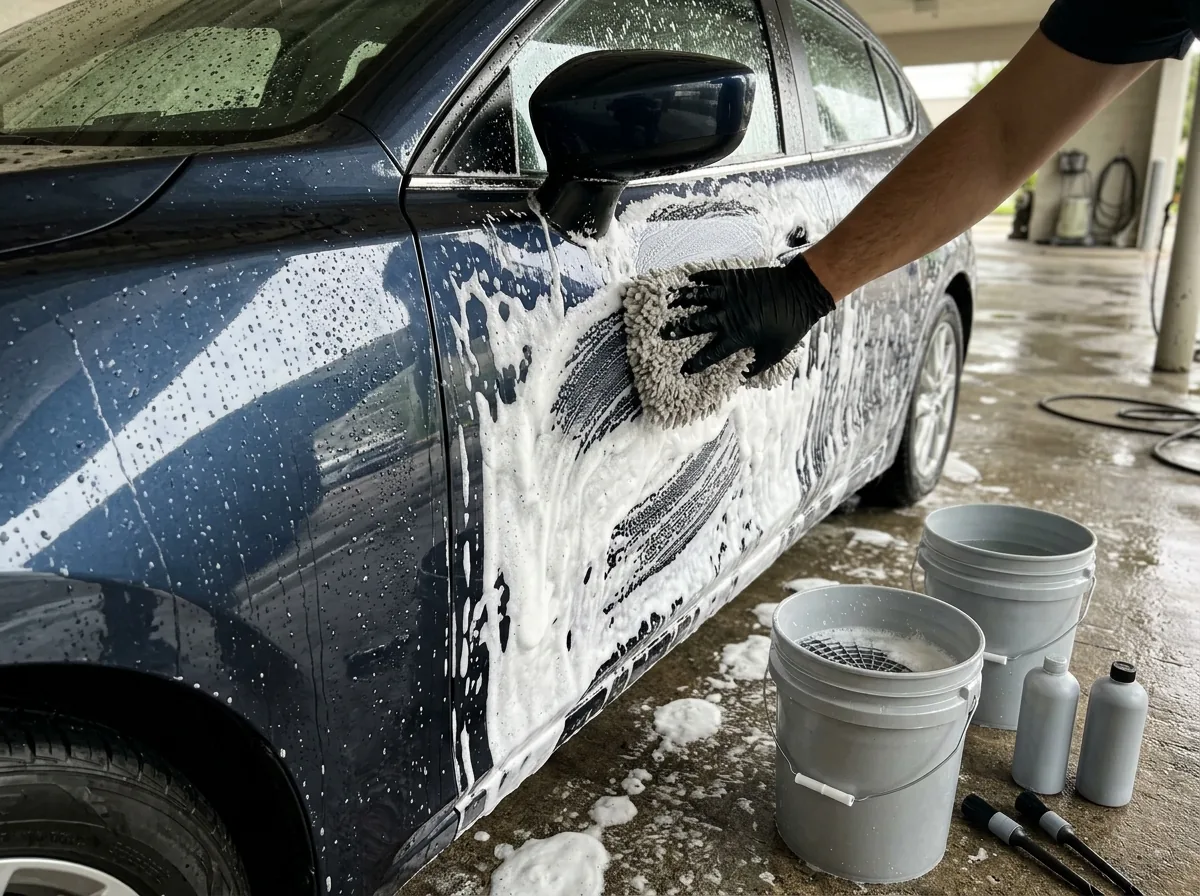
A maintenance wash is the routine the coating maker asks for, done by hand: about every two weeks, a pH-neutral shampoo with no wax in it, no brushes, and a microfiber towel to dry. One maker adds that its customers should skip soap for the first 5 days and stick to a coating-safe shampoo after, because other soaps can leave a residue that dulls the beading. The full wash routine is also on the homepage.
Iron and Mineral Decontamination Washes
Iron particles from brake dust and other sources embed in the surface, and mineral spots from hard tap water or sprinklers dry on top. One maker recommends an iron remover every 3 to 12 months on a coated car, used during the wash, and a dedicated spot remover for water spots the wash doesn't take off. If spots have already etched into the paint, that's polishing work: see paint correction.
Toppers and Boosters
A topper is a spray product that goes on over the coating to refresh the slickness. Makers want a booster compatible with the coating every few months; one says every 3 to 12 months. Wax is not the same thing, and coating care sheets steer owners away from it. It's upkeep for the surface, not a repair for swirls or etching.
Annual Inspections for Maker Warranties
The longer coating warranties are kept alive by a yearly visit to an installer the maker approves. One maker's annual service covers an exterior wash, decontamination, a visual inspection and a booster or fresh top layer, for a fee the installer sets. Two makers require it within 30 days of the anniversary. One coating maker criticizes its own industry for this: with a new top coat every year, it says, "the warranty clock never gets a chance to run out." Note the anniversary date when you pick the car up.
Polish-and-Recoat or Full Coating Removal
A ceramic coating comes off only by abrasion, which means machine polishing. That's also how a tired coating gets renewed: one detailer recommends polishing and recoating every 2 to 3 years for the best gloss. A bad professional-grade application can need wet sanding to fix. Removal and recoating is paint correction followed by a new coating, so the paint correction page covers what the polishing involves.
Why Kent car, truck, boat and RV owners call Ceramic Coating Kent
- Sending a request costs you nothing, and you decide whether to book
- It reaches one independent local shop, never a list of bidders
- Ask for a paint-depth reading and an inspection before correction is priced
- Ask which coating goes on and whether the maker has the warranty registered
- Plan for a week or two without washing while the coating cures
Coating Warranty Registration and What Voids It
A coating warranty is a contract with the coating maker, not with the shop, and it only exists once it's registered. In one maker's terms, the installer is responsible for registering it; if that doesn't happen, the owner can send in the paid invoice. Keep that invoice.
What makers' terms commonly exclude or void:
- Damage from manual or automatic wash brushes, abrasive cloths or sponges
- Skipping the maker's care method, or using abrasive polishes and other brands' products on top
- Collisions, and stone chips, scratches, swirls and water spots in general
- Coating applied by an installer the maker hasn't authorized, or product that isn't genuine
- Vehicles used for commercial purposes, in one maker's terms (a point for fleet coatings)
- Finishes without a clear coat, and matte finishes, in one maker's terms
The cover is narrower than the word suggests. One maker points out that its warranty covers the coating, not the clear coat under it. Payouts are capped: at $2,000 or the coating's cost, whichever is less, for one maker, and the lesser of the cost or $1,000 for another. Claims go through the maker's own system, and one maker wants to hear about a failure within 30 days of noticing it.
The First Two Weeks After a Coating
Makers' instructions for a fresh coating differ, so follow the sheet for the product that went on. What four makers say:
Driving
cured enough to drive outside within 48 hours (one maker)Keeping it dry
12 hours (one), at least 24 hours (another), 24 to 48 hours for light exposure (a third)First wash
after 7 days (one), a week clear of water and chemicals (another), up to two weeks (a third)Full hardness
up to a week, with rain, bird droppings and touching kept off the paint meanwhile
That's easiest to manage in Kent's dry months. SeaTac's normals put July at 0.60 inches of rain with about 2 days of a tenth of an inch or more, against 6.31 inches and about 13 such days in November. A coating booked for June through September has the best chance of a dry first week; in the wet season, plan the drop-off around a dry stretch and ask whether the car can stay indoors overnight.